What I'm reading: the family that taped a departure date to the kitchen wall
Caspar Craven put a departure date on his kitchen wall five years out; the cost table in the back of his book is what I can't stop rereading.
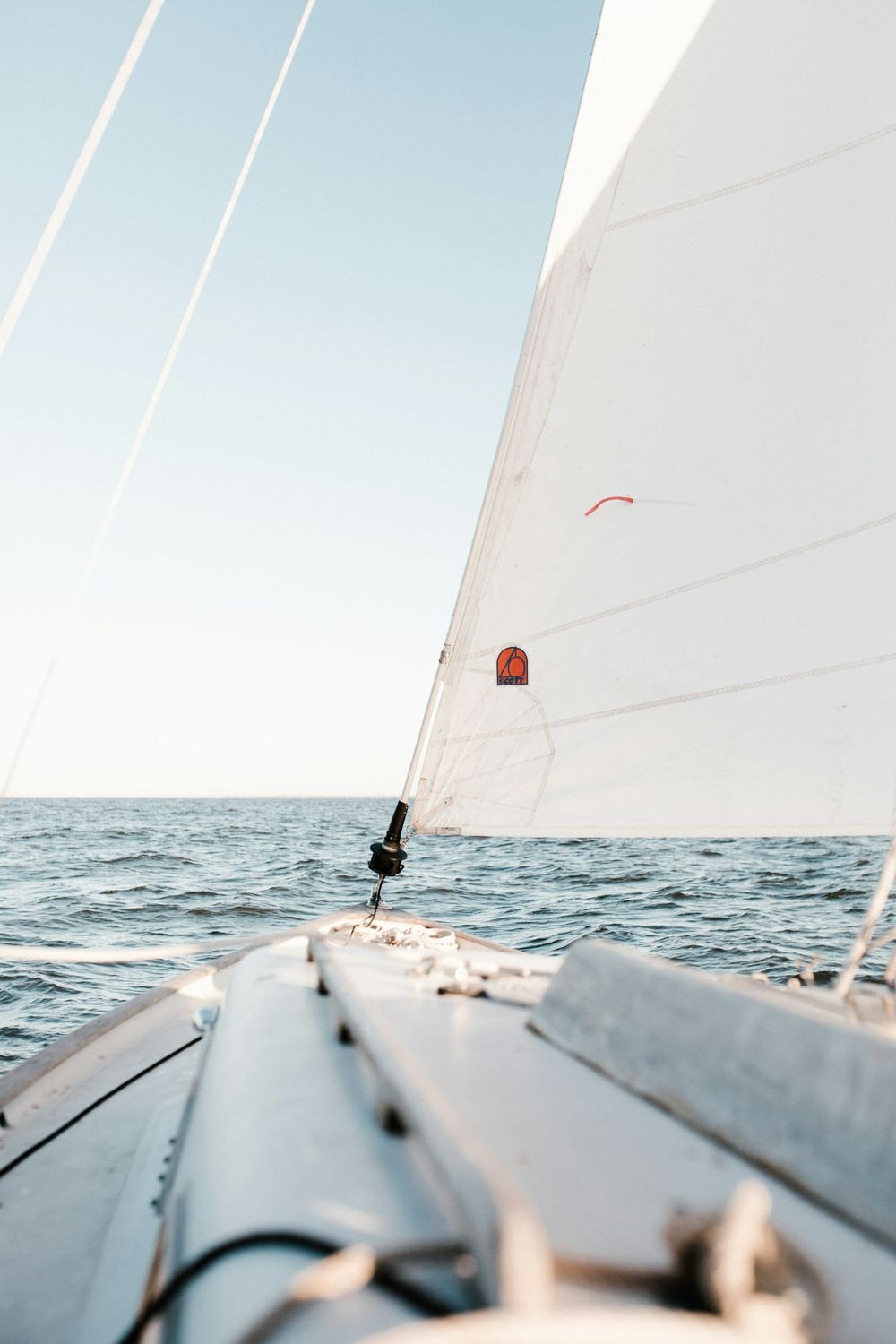
I picked up Where the Magic Happens (Caspar Craven, Adlard Coles, 2018) expecting a sailing memoir. What I got was closer to a financial plan with a boat in it, which is probably why I finished it in two nights.
The setup: June 2009, a garden party in Kent. Craven is co-owner of a consultancy, working 18-hour days, with two kids and a third on the way. His brother-in-law mentions a family who sailed around the world — as an example of a ridiculous thing to do. Six months of weekends with pens and paper later, the Cravens put a vision statement on their kitchen wall: “On August 1, 2014, we are going to set sail.” Then they spent five years making the sentence true. They left Southampton in August 2014 aboard Aretha, an Oyster 53, with kids aged nine, seven, and two.
The part I keep rereading is the cost table. Craven puts the minimum all-in figure for the trip at $713,500: a $500,000–$750,000 boat budget, $6,000 a month for living and maintenance, $9,500 per person in training courses, $10,000 for radio and satellite comms, $30,000 for the World ARC entry. Those are roughly 2014 dollars. Inflate the monthly number at 3% and you get about $8,500 today — which lands almost exactly on the figure from the budget framework I wrote about last month. Two independent sources converging on the same number is about as good as this kind of estimating gets.
The boat line has moved the most. A used Oyster 53 was a $500,000–$750,000 proposition then; the 50-foot cats on our worksheet run $700,000 to well past $1M. So the honest 2026 floor for a family of six doing what the Cravens did is somewhere north of $1.2M, and I would rather write that number down now than discover it later.
The advisor takeaway: the date did the work. “Someday” is not fundable. A specific date five years out converts a dream into a schedule you can discount backward from — boat purchase here, refit there, cash reserves by this quarter. Craven funded his by building three businesses and selling one for seven figures while mid-Pacific. Your mechanism will differ. The date will not.
The chapter that will stay with me is not financial. Between Tahiti and Niue, Aretha lost all electrical power — engine, generator, instruments — 500 miles from land in 30-foot seas. Caspar and Nichola hand-steered for three days, navigating by sun and stars, and the book treats it as the family’s proudest moment rather than its worst. That $9,500-per-person training line looked padded until that chapter. Then it looked cheap.
Our own departure date currently lives in a spreadsheet, a few rows below college funding and boat depreciation. After this book I think it belongs on the kitchen wall instead, where the kids can see it.