6.9 per 1,000: the lightning number I didn't want to find
I sat down to read about windlass amp draw and fell into a BoatUS claims-data hole instead — now I can't unsee what it says about multihulls.
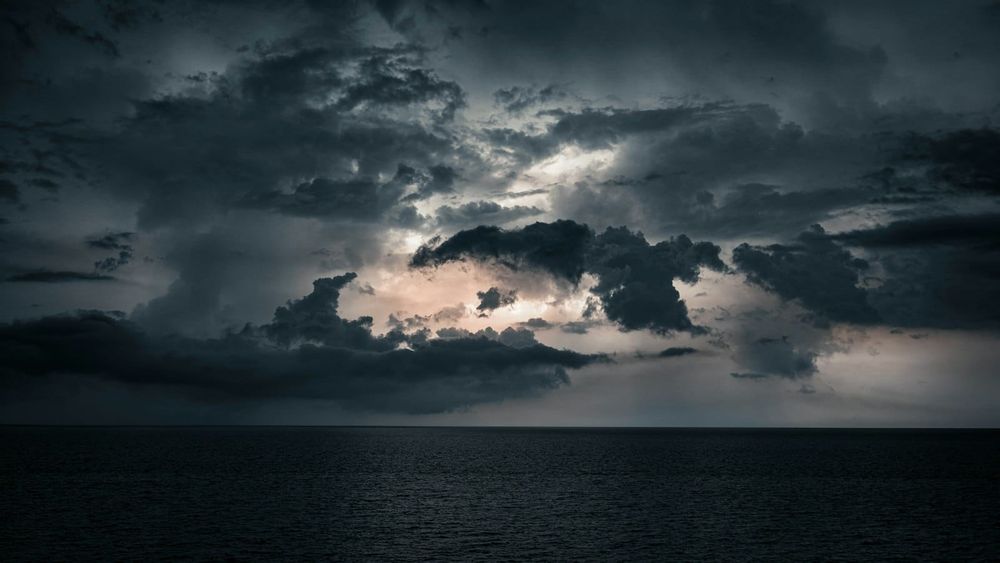
I was supposed to be reading about windlass amp draw last night. Instead I ended up three tabs deep in BoatUS Seaworthy claims data and found a number I've been chewing on ever since: 6.9. That's how many boats out of every thousand get struck by lightning in a year — but only if the boat is a multihull sailboat. It's the highest strike rate of any vessel type they track. A monohull auxiliary sailboat sits at 3.8 per thousand. A bass boat or a pontoon is down around 0.1. So the 50-foot cat we're researching — the exact hull shape I keep telling my wife is the safe, stable, kid-friendly choice — is also, statistically, the most lightning-prone thing on the water.
The theories for why aren't mysterious. No deep keel bonding the rig to a big underwater ground. Two hulls and a wide beam, so more footprint sitting under the cloud. And the mast on a modern performance cat is tall — the boats we like carry a lot of air draft. Put those together and you've built an efficient path between a charged cloud and the sea, with four kids' bunks somewhere in the middle of it.
Here's where the wealth-advisor brain takes over, because a strike is rarely a fire-and-sink event. It's an electronics event. A direct hit doesn't usually hole the boat; it cooks everything with a circuit board. Chartplotter, autopilot, radar, VHF, AIS, the lithium BMS, the inverter, occasionally the rig's terminals and a through-hull or two. I've read claim write-ups where a single strike totaled $40,000 to $60,000 of gear on a well-found cruising cat, and the boat looked completely fine from the dock. Five years out with the family, that's not just a check from the insurer — it's weeks in a boatyard somewhere the replacement chartplotter has to arrive by air freight.
What I haven't resolved is what to actually do about it. The market is full of confident answers I don't trust. The little bottlebrush "static dissipators" you see zip-tied to mastheads — the physics is shaky, and BoatUS's own data has never shown they lower the strike rate. A proper bonded grounding system, tying the rig and chainplates down to substantial underwater plates, is the more defensible engineering, and it's closer to what I'd want. But on a cored composite cat that's a real installation, not a weekend job, and done badly it invites its own galvanic-corrosion problems.
So the number didn't change the plan. We're still buying a catamaran; the case for one with young kids is too strong to walk away from over a tail risk. What it changed is the budget and the checklist. I'm now treating lightning protection as a line item on the boat worksheet, not an afterthought — a grounding system speced during survey, a backup handheld GPS and a spare VHF living in the oven (a rough Faraday cage) on every offshore departure, and an insurance policy where I've actually read the electronics clause.
I went looking for amp draw and found a lesson in tail risk instead. 6.9 per thousand is a small number, right up until it's your thousand.