Shorthanded Spinnaker Handling: A Cruiser Playbook for Flying a Chute with Two Hands (or One)

Flying a spinnaker shorthanded — whether with your partner across the Atlantic or solo on a coastal hop — is one of those pieces of seamanship that has two versions. The first is the romantic one: a cruising chute pulling gently in a trade-wind sigh, autopilot steady, second hand below cooking lunch. The second is the one nobody writes about: a sail pinned on the forestay at midnight with the kite half-furled and the bow plunging because a squall arrived three minutes before the weather router said it would. The difference between the two versions is preparation.
Pick the Right Sail
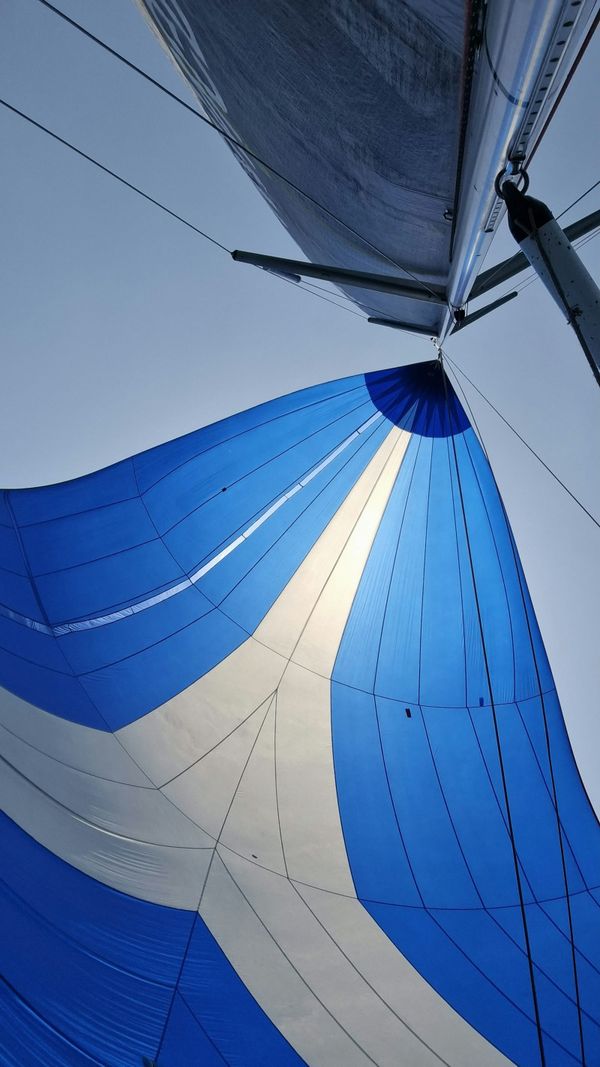
For a cruising couple, the smart kit is an asymmetric cruising chute on a top-down furler, tacked to a retractable sprit or a dedicated bow fitting. Nothing else comes close for convenience. A code zero or reacher on the same furler handles tighter angles; a true asymmetric, cut fuller, handles broad reaches down to about 140 degrees apparent.
Symmetric spinnakers are still the right answer on long downwind passages where you want to sail deep — typically 150–170 AWA. On a shorthanded boat, a symmetric lives in a sock. Without a sock, you are not flying a symmetric shorthanded.
The single biggest mistake shorthanded cruisers make is sizing up. Your chute should be smaller than your racing friends would pick for the same boat. A 0.75-oz sail in the tropics is sized for short-bursts in full breeze; for 12-14-hour average trade-wind sailing you want something closer to a 1.5-oz cruising weight that lives inside its own furler and never touches the deck.
Systems First, Then Sails
Before you hoist anything, the deck layout has to be right. The tack line, halyard, and sheets should all lead back to the cockpit, through low-friction blocks, to winches that you can reach without leaving the helm unattended. If your setup requires anyone to go to the mast to hoist, drop, or manage the sock, you are running a two-handed system with one pair of hands.
A top-down furler needs a dedicated furling line led aft through a fairlead that holds the line in the same plane as the drum. A top-down that goes to pieces at 12 knots of apparent wind usually has a line-lead problem, not a sail problem.
Sheets should be oversized compared to what the sailmaker spec says. Dyneema sheets are fast but burn through snatch blocks in a knockdown. Polyester is heavier but forgiving. For a 40-foot cruising boat, 10mm or 12mm polyester cruising sheets are the right compromise.
The Hoist and the Set
Shorthanded, the rule is: hoist with the sail under control, not under load. With a top-down furler, that means getting the tack line set, the furler loaded up, the halyard all the way up, and the sail fully furled before you turn downwind. Then you sheet on, point at your downwind target, and unfurl.
With a symmetric in a sock, the process is nearly the same. Rig everything first, hoist the sock-bound kite to full hoist, get the sheets set, then pull the sock up from the foredeck. Never try to do this with the autopilot driving an old-style vane-based system — you want a modern rate-gyro autopilot that can hold a true-wind angle, not just a compass heading.
Gybing Alone
An inside gybe on an asymmetric furler is a non-event: furl, sail through the new angle, unfurl on the new gybe. It costs about 30 seconds of boat speed and gains you a margin of safety that is worth every second.
Outside gybes are faster but require a precise sheet-and-lazy-sheet handoff that is much harder shorthanded. Save outside gybes for racing. Cruising, always furl and gybe.
Symmetric gybes shorthanded are genuinely hard. A reliable approach is to sock the kite, gybe under main alone, and re-set on the new side. It's slow. It's also the approach that has never broken a boat.
The Takedown
The hardest moment for shorthanded crews is the takedown in building breeze. If the squall is 15 minutes out, furl now. The price of a premature furl is half an hour of slower sailing. The price of a late takedown is usually a torn sail and occasionally a hospital trip.
A cardinal rule on our boat: if either crew member is starting to feel uncertain about the sail's behavior, the other person immediately initiates the takedown without a conversation. This is not a moment for debate.
When to Leave It Rolled
Some passages do not want a chute at all. If you're crossing a convergence zone, expecting squalls, or sailing a multi-day passage where you'll be alone on watch at night, the cruising chute lives in its sock and the boat sails a little slower. That is the right call. The bluewater sailor's job is not to maximize VMG; it is to arrive.