Spinnaker Handling in Heavy Air: When to Keep Flying and When to Drop
The right time to take the kite down is two minutes before you think you should. The wrong time is three minutes after.
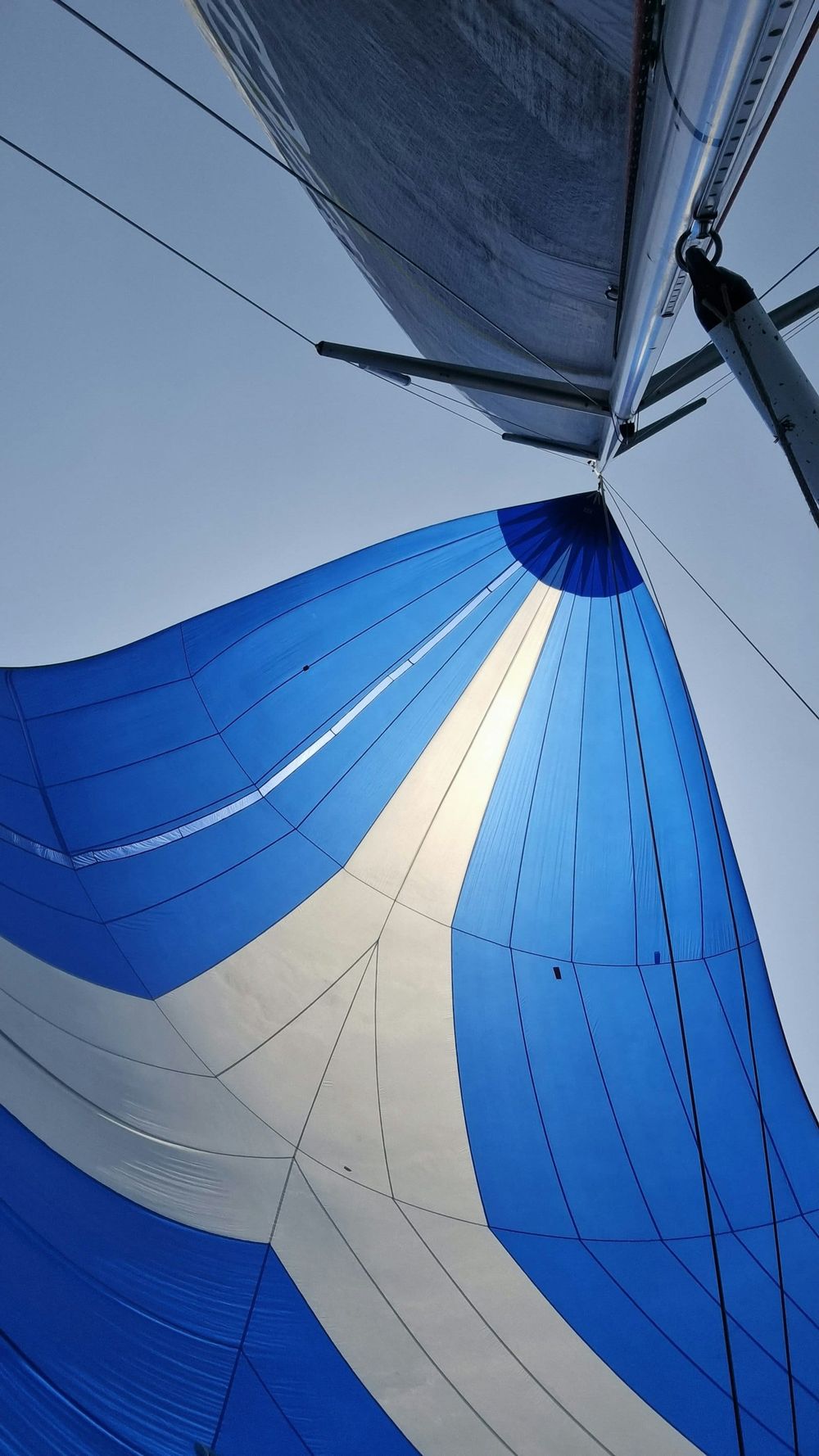
The right time to take the spinnaker down is roughly two minutes before you think you should. The wrong time is three minutes after. In heavy air the failure mode is not wind — it is wind plus sea state plus the moment the helmsman gets tired or distracted. Reading the conditions accurately, having a rehearsed dousing sequence, and knowing the crossover where the kite stops earning its keep is the difference between a clean run and a broach.
Start with crossover. On a typical 40-foot cruiser-racer with a symmetric kite, the upper limit for the heavy A2 or S2 is around 22 knots true downwind, dropping to about 18 knots true at 100 degrees true wind angle. Beyond that, you are surfing rather than sailing, and the gust factor matters more than the average. A 22-knot average with gusts to 30 is a different sail than a 25-knot average with gusts to 28. The peak wind speed within a 5-minute window is the relevant number, not the average.
For asymmetric-only boats, the crossover is generally lower because the apparent wind angle stays forward. An A3 reaching kite on a 45-footer is usually depowered or doused by 22 knots apparent. A specialized fractional code zero may carry to 28 knots apparent on a tight reach but becomes unmanageable the moment the helm needs to bear away.
Sea state changes the math. The same boat in 22 knots and a 1-meter chop is fine. The same boat in 22 knots with 2-meter swell at a 6-second period is not. The shorter the period relative to boat length, the more the boat will surf, and surfing under spinnaker introduces rudder ventilation, which is the most common cause of broaches in heavy air. The fix is helm input — a sharp downturn into the wave to put the rudder back in solid water — not main sheet ease, which is the instinct that gets most amateur helmsmen in trouble.
Vang tension matters more than people give it credit for. In heavy air downwind, a slack vang lets the boom sky up on each surge, which depowers the main right when you need it for stability. The kite then takes over more of the rig load and the boat rolls. A firm vang, even on cruising-style runs, keeps the main biting and reduces the magnitude of the rolls. The same goes for outhaul: tighter than you would think, even off the wind, to keep the main flatter and more stable.
The dousing sequence is where most heavy-air problems happen. The right method on a symmetric-rigged boat is the leeward gybe douse: ease the pole forward to the headstay, blow the guy, and gather the sail behind the main as the foredeck pulls it down through the companionway hatch or into the bag. Done well, this takes 30 seconds and the boat barely notices. Done poorly — with the pole still aft, the guy held too long, or the takedown line led incorrectly — the kite flogs in the slot, the main blankets it, and you end up with a foredeck full of wet nylon and a boat that just rolled 30 degrees.
For asymmetric boats with a sock, the sock is your friend in heavy air. Spool it down before the gybe, not during. The mistake is trying to do both at once. Get the sock down first, then bear away into the gybe with a furled or socked sail. The mistake is the opposite — gybing with the kite flying, then trying to sock it as the boat rolls.
Two crew-related rules. First, the foredeck call drives the timing, not the helm. The person actually handling the sail should be the one saying "now" — not because the helmsman is wrong, but because the timing window is shorter than it looks from the back of the boat. Second, never reach for the next gust. If you are already on the edge, the next puff is the one that breaks something.
The unsexy rule that makes the difference: in heavy air offshore, plan the douse before you need it. Brief the crew, lead the line, position the takedown bag. Make the decision to drop on the basis of sea state plus the next 15 minutes of breeze, not the current conditions. The kite that comes down clean costs you 90 seconds. The one that doesn't costs you a sail and possibly a mast.