Storm Tactics Offshore: Heaving-To, Drogues, and When to Deploy Each
There is no single correct heavy-weather tactic. Picking the wrong one for your boat and sea state is how good crews get into trouble.
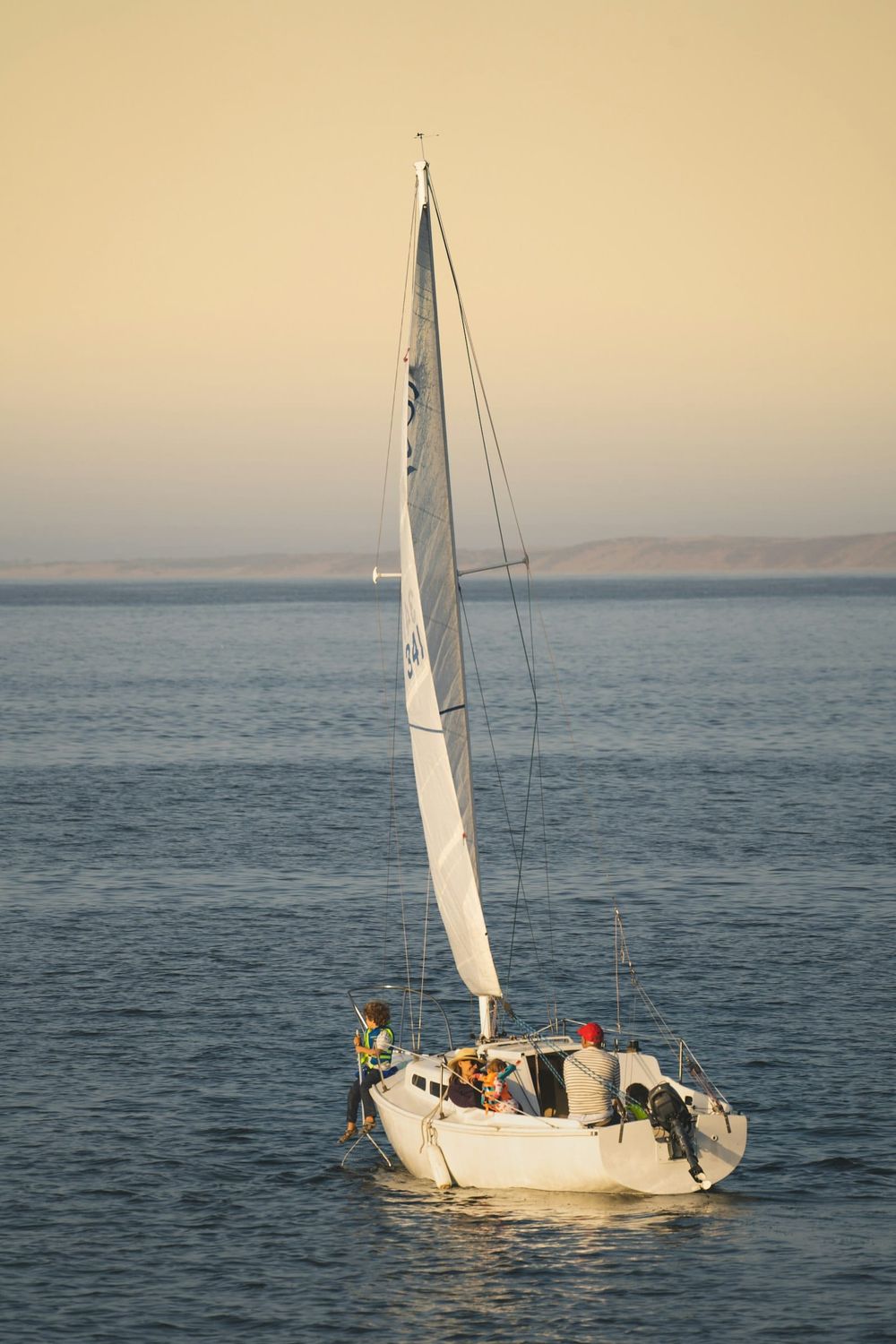
Heavy weather offshore is not a single problem. It is a series of decisions, made in deteriorating conditions, where the right answer depends on your boat, your crew, the sea state, and — most often overlooked — where the depression is in its life cycle. Three tactics dominate the conversation: heaving-to, running off, and deploying a drogue or sea anchor. Picking the wrong one is how good crews get into trouble.
Heaving-to is the workhorse for monohulls in 35 to 50 knots of breeze and seas that are organized but not yet breaking heavily. The technique is simple in description and surprisingly fiddly in practice: backwind the staysail or storm jib, lash the helm to leeward, and trim the main to the angle that balances the boat with about 50 degrees of true wind on the bow. A well-set-up boat will fore-reach at 1 to 2 knots, leave a clear slick to windward, and ride waves at an angle that lets the bow rise to the swell rather than punch through it. The Pardey-style hove-to position works on most full-keel and cutter-rigged boats; modern fin-keel boats with separated rudders behave differently and may need more sail aft to keep balance.
The failure mode of heaving-to is the boat falling off and getting caught beam-on. This happens when the main is too small for the staysail load, when the rudder isn't lashed firmly, or when the seas have built past the point where the slick to windward is no longer protecting the boat. As a rough rule, if you start seeing breaking crests on a quarter-mile period, the slick isn't doing its job, and you need to switch tactics.
Running off works when the seas have grown past what the boat can comfortably take from the bow but have not yet started catching up to your stern. Bare-poled or with a small storm jib, a well-handled boat can run for hours in the 50-to-65-knot range, helmed actively to keep the stern square to the largest sets. The risk is rounding up or pitchpoling. A modern light-displacement boat surfing down the face of a 6-meter wave at 12 knots is a more dangerous situation than the same boat hove-to in the same wind. Older heavy-displacement designs are friendlier in this mode; modern beamy production boats are not.
Drogues solve the running-off failure mode by slowing the boat enough to stay in control. The Jordan Series Drogue — a 100-to-200-foot rode with dozens of small cones — is the right tool for a boat that has to sit with its stern to the seas and accept the worst of it. Properly sized for the boat, a series drogue holds boatspeed in the 1.5-to-2.5-knot range, keeps the stern square through breaking crests, and works without active steering. The trade-off is that the boat is committed: you cannot easily retrieve a drogue in 50 knots of breeze. Once it's set, you wait for the system to pass.
Sea anchors — deployed off the bow — work in some conditions and not in others. They keep the bow into the seas, which is reassuring, but the loads on the rode at the surge of each wave are enormous, and many boats have lost rodes, fittings, or chainplates trying to ride out a system on a sea anchor. They work best on multihulls and on heavy-displacement boats with a strong forefoot. They are less reliable on modern fin-keel monohulls with fine entries.
The most useful piece of preparation is not the gear; it is the practice. The first time you set a drogue should not be in 60 knots of breeze. Take an afternoon in 15 knots and deploy it. Time the deployment, note the loads, see how the boat lies. Same for heaving-to: if your boat does not heave-to cleanly in 20 knots in flat water, it is not going to do better in 40 knots in a confused sea. Most boats that are advertised as easy to heave-to need an hour of sail balance experimentation to find the right combination.
The tactical decision tree, simplified: heave-to up to about 45 knots if the seas are organized; run off above that as long as you can helm the boat actively; deploy the series drogue when the seas are catching the stern. The boat that survives a serious system is the boat whose crew rehearsed each transition before they needed it.