The leg I keep rehearsing: Galápagos to Nuku Hiva
I keep sailing the same 2,965 miles from a desk in Bend, and the weather files keep giving me the same four-line answer.
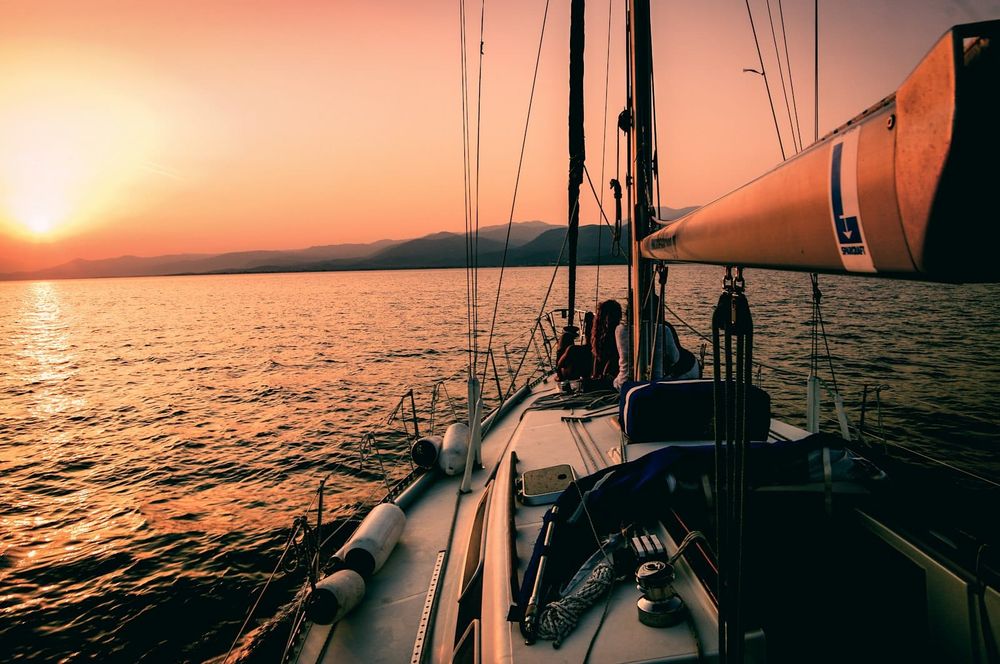
Of all the legs on the route spreadsheet, this is the one I keep re-running: Galápagos to the Marquesas, about 2,965 nautical miles from Puerto Ayora to Taiohae Bay on Nuku Hiva. It's the longest single passage of the whole circumnavigation — nothing else comes within a thousand miles of it — and we'll sail it with four kids who, by then, will be old enough to stand daylight watches and young enough to consider a flying fish on the trampoline the best thing that happened all week.
The window logic is mostly about what you're avoiding. French Polynesia's cyclone season runs November through April, so the classic departure is March through May: leave Galápagos as the season winds down, arrive with the southeast trades settled in for the southern winter. The routing itself is old advice that still holds — don't rhumb-line it. Drop southwest to 3–5°S first and find the established trades, then bend west. The first three days are the whole problem: light air, leftover ITCZ squalls, and a current with opinions. After that it's the most reliable downwind conveyor on earth.
Here's what I'd want on the GRIBs before untying: southeast trades of 15–20 knots showing at 5°S, 95°W and holding across the first 500 miles of the route on a seven-day ECMWF run; the ITCZ sitting north of about 2°N with no southward sag in the 96-hour outlook; no organized convective cluster west of the islands on the satellite loop; combined seas under 2.5 meters. That's it — four lines. If they're all true, you go, even if it's a Tuesday and the provisioning list has holes in it. Waiting for perfect on an 18-day passage is a category error; you're buying the first 500 miles, not the whole trip.
The number that anchors this note is 180. That's the daily run I'd plan on for the 50-foot cat we're researching, sailed the way you sail with kids aboard — reefed at night, no spinnaker after dark, nobody being a hero. 2,965 divided by 180 is sixteen and a half days; call it eighteen with the slow start. Eighteen days also happens to be the sizing case for everything else: watermaker output, fresh food that runs out around day ten, and how much patience four children have for the same 270-degree horizon.
What I haven't settled is whether we stop at Galápagos at all. The autografo, the agent, the park fees for six people — the all-in cost lands somewhere around $3,000, and it pushes a surprising number of boats to sail direct from Panama instead: roughly 3,850 miles nonstop. Adding nine hundred miles of ocean to save three thousand dollars is the kind of trade that reads differently at anchor than it does in a spreadsheet in Bend. For now the answer is we stop. The kids get Darwin's islands; I get to break the biggest passage of the trip into two pieces I can actually rehearse.