Team Francesca Clapcich Names Ocean Race Atlantic Crew: Bona, Mettraux, Harris on the NYC-Lorient Start
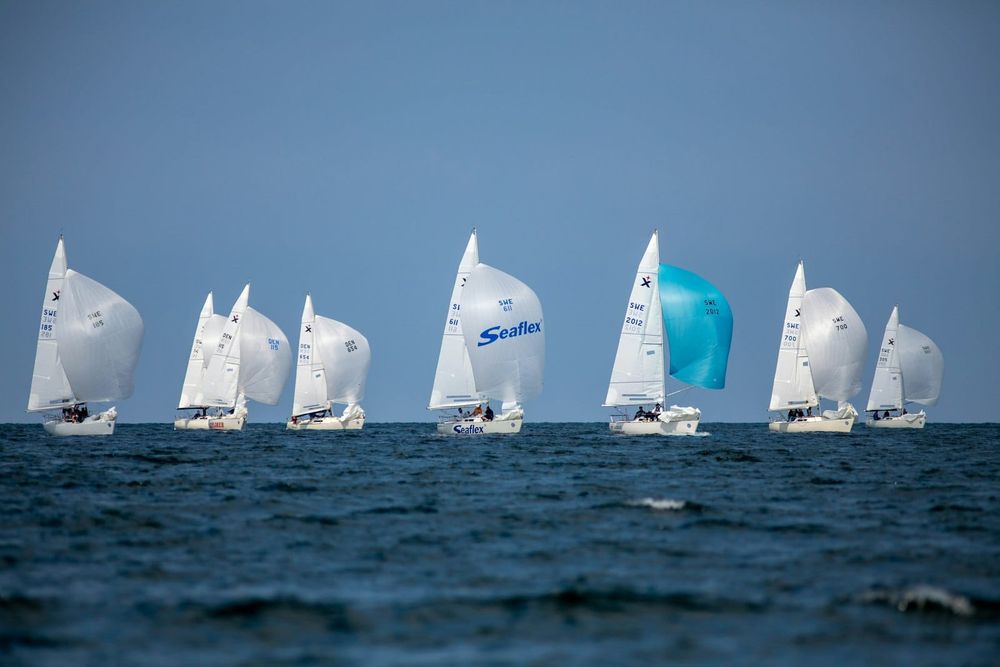
Francesca Clapcich has confirmed the crew list for Team Francesca Clapcich Powered by 11th Hour Racing's Ocean Race Atlantic campaign, and it's a shorter, sharper team than the IMOCA fully-crewed specs usually produce.
Joining Clapcich on the New York–Lorient transatlantic this September are Alberto Bona (Italy), Elodie-Jane Mettraux (Switzerland), and Will Harris (Britain). Four sailors across four passports — it's the kind of international line-up 11th Hour has leaned into since the Malizia/11th Hour swap last winter, and each of the three brings a piece of the puzzle that a short offshore requires.
Bona is the most experienced IMOCA pilot on the boat after Clapcich herself. He finished the last Route du Rhum in a respectable mid-pack slot and has been racing Class40 since 2017 — that short-handed discipline pattern shows up in the crew's overall DNA, which skews toward solo and double-handed pedigree rather than the fully-crewed Ocean Race veterans of the 2022-23 edition. Mettraux is the boat's trimmer-tactician, and anyone who followed the last two Ocean Race editions knows her pedal-down approach in rotating pairs. Harris brings the Malizia systems knowledge: he was Boris Herrmann's right hand during the build and first offshore campaigns of the boat the team now races. Having the person who knows every through-hull and canting keel hydraulic line on board matters when the boat is still reasonably fresh post-refit.
The Ocean Race Atlantic itself is a different beast from its Round-the-World sister event. Start is New York, September 2, 2026; finish is Lorient, France, two weeks out — single leg, no stopover, no in-port racing. That's been designed deliberately to compress the storytelling window and give teams a calendar that fits around existing IMOCA circuit commitments (Transat Jacques Vabre, Vendée Globe prep, and the Route du Rhum cycle). Clapcich's team targets the Vendée 2028 as the end goal, so the Atlantic campaign is as much a boat shakedown with her new crew as it is a race result chase.
The route matters. A September departure puts the fleet into the tail end of the hurricane season on the US side, a North Atlantic low track that's typically active by mid-month, and the Azores High that refuses to sit still. Routing options split early: high-speed boats can try to skirt south of the Azores High and ride the trough train across; the more conservative lines head north and take whatever the first low serves up. For an IMOCA, that means deciding on the first 36 hours whether to extract east into the Gulf Stream and force the northern line, or pay a VMG penalty to stay south where the weather is gentler but the boat can't reach its potential.
11th Hour — the boat — holds the IMOCA 24-hour distance record at 641.13 nautical miles, set in 2023 during the last Ocean Race. That speed ceiling is only useful if the conditions deliver, and a late-summer North Atlantic isn't a guarantee of the steady reaching angles that record needed. Clapcich's team will know by Day 3 which game they're playing: a conservative delivery-mode crossing in light-air Atlantic High, or a hammer-down push through a named storm. Both have happened in recent Transat editions.
The crew size question is the one the IMOCA community is debating. Four sailors is the minimum — some teams are running five for the Atlantic race to add a sixth watch slot. Clapcich is going with four, which translates to two-person watches of four hours on, four off, with one person on the helm and one on systems. The upside is sleep schedule discipline and simpler rotation; the downside is less margin if someone gets hurt or sick. Given Clapcich's preference for clean watch systems on her last Ocean Race legs, four-up is on-brand.
The boat itself went through a winter refit at Lorient's La Base. The changes worth noting: a new mainsail from North (the previous one had enough miles on it after the last Ocean Race and Malizia's Vendée campaign), a reworked J2 setup for better reaching trim, and an updated autopilot with the latest NKE firmware that gives fine-grained wind-angle control the old version couldn't match. The canting keel bearing package was refreshed — a common item after a heavy offshore season — and the foils had a small leading-edge repair after a grounding incident at Lorient in February that the team has been quiet about but acknowledged in the recent press release.
The Atlantic Ocean Race is the first real test of this specific crew on this specific boat. A win is possible but not the stated goal; a finish in the top three would set up a credible Vendée campaign narrative and validate 11th Hour Racing's sponsorship investment through 2028.
For anyone following the sport, the thing to watch isn't the pure speed — it's how Clapcich and Bona split routing decisions, and whether the team's Purpose Program (structured around diversity and belonging) translates into the kind of cohesive offshore performance that wins the boat's last leg rather than the first.
Two weeks of racing, one boat, four sailors, and roughly 3,000 miles of variable North Atlantic. Start guns fire in Manhattan on September 2.