The Ocean Race Atlantic 2026: NY to Barcelona, Two-Stop, and the IMOCAs Are the Story
A short-format Atlantic crossing in IMOCA 60s is the bridge between the Vendée and the next round-the-world. Here's the route, the boats, and why this race actually matters.
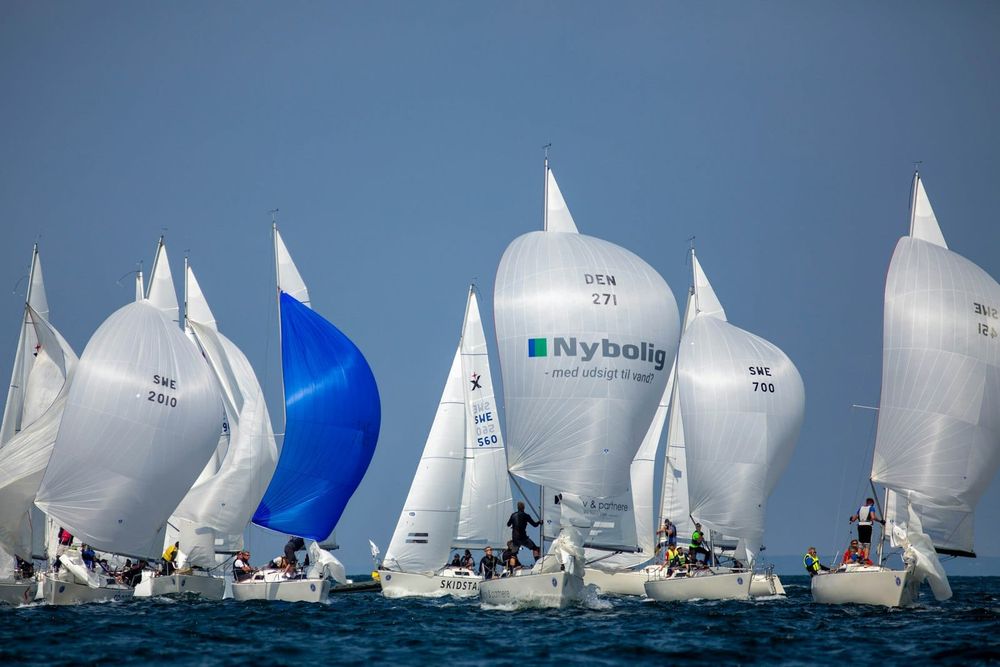
The Ocean Race Atlantic — New York to Barcelona — is the connective tissue between two seasons that historically didn't talk to each other. It uses IMOCA 60s, the same boats that ran the 2024 Vendée Globe and that will leave Alicante in winter 2026–27 for the next round-the-world edition. For the first time, the same hulls and the same skippers thread through three back-to-back marquee events with overlapping crews and overlapping sponsors. That's the story.
The route, in plain terms
NY to Barcelona is roughly 3,800 nautical miles on the great-circle, but no one will sail that. The early routing models will spit out a deep southerly arc that picks up the Azores high on the south side, riding the trades down to about 30°N before clawing east toward Iberia. If a meaningful low parks itself over the Bay of Biscay during the back half of the race, the leaderboard will rearrange itself in 36 hours — that's how IMOCA Atlantic crossings end. The fast boats win the first 2,500 miles. The smart boats win the last 1,300.
Why the IMOCA fleet is different now
Post-Vendée, the foiling IMOCA pack is more matched than at any point in the last decade. The Verdier-designed boats — Charlie Dalin's MACIF Santé Prévoyance and Yoann Richomme's Paprec Arkéa among them — are the benchmark. The newer Manuard hulls are within touching distance. The pre-2022 generation can still win in the right breeze, especially upwind, but they cannot match the foilers when it's 18–25 knots TWS and reaching at 130° true.
For a short Atlantic, that matters. NY to Barcelona is a reach. Almost the whole thing. The boats that can sit on a 24-hour run of 580 nautical miles — and several of these can — will make 50 to 80 miles a day on the older fleet.
What's actually new about this format
Three things:
Two stops, fully crewed. Unlike the Vendée's solo non-stop, this is a crewed sprint. Skippers will sail with rotating watches, push the boats harder than a solo can, and rely on co-skippers to handle systems failures without losing miles to slow. Expect daily runs 8–12% faster than solo IMOCA averages.
Onboard reporters. Mandatory media slots return. That means the broadcasts will have actual offshore footage — a cyclone-eye shot of someone trimming a fractional A3 in 28 knots is worth a hundred shoreside interviews.
Round-the-world qualifier weight. Strong finishes here count toward starting positions and broadcast attention for the 2026–27 round-the-world. Sponsors are watching. Programs that need a results bump before the Alicante start will push.
Who to watch
Dalin and Richomme are the obvious calls — both finished top three in the Vendée, both have race-ready boats, both have crews that have already done North Atlantic deliveries this spring. Boris Herrmann's Malizia program has been quietly strong in transatlantic conditions and brings the most consistent media operation in the fleet. Sam Davies, returning from a refit, is the wildcard — if Initiatives-Cœur is up to speed, she'll be in the top five.
What to bet on if you're a routing nerd
Watch the Azores high from day three onward. The race is decided by whether the fleet splits north (faster, but more risk of a Biscay parking lot) or stays south (slower miles but reliable trades). Most years the south play wins. Most years.
The Ocean Race Atlantic 2026 announcement includes start and finish dates not yet confirmed publicly. Watch theoceanrace.com for the official notice of race.