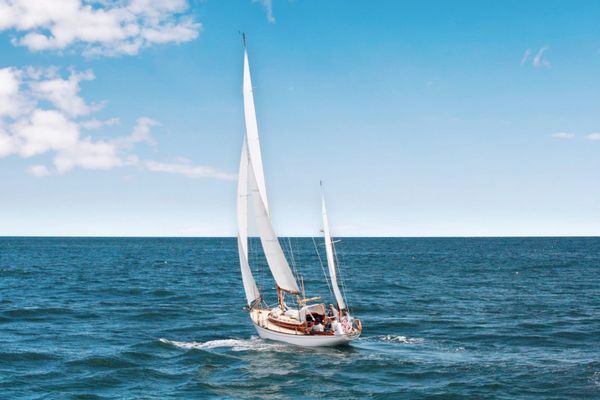
Heaving-To: The Storm Tactic Most Sailors Skip Until It's Too Late
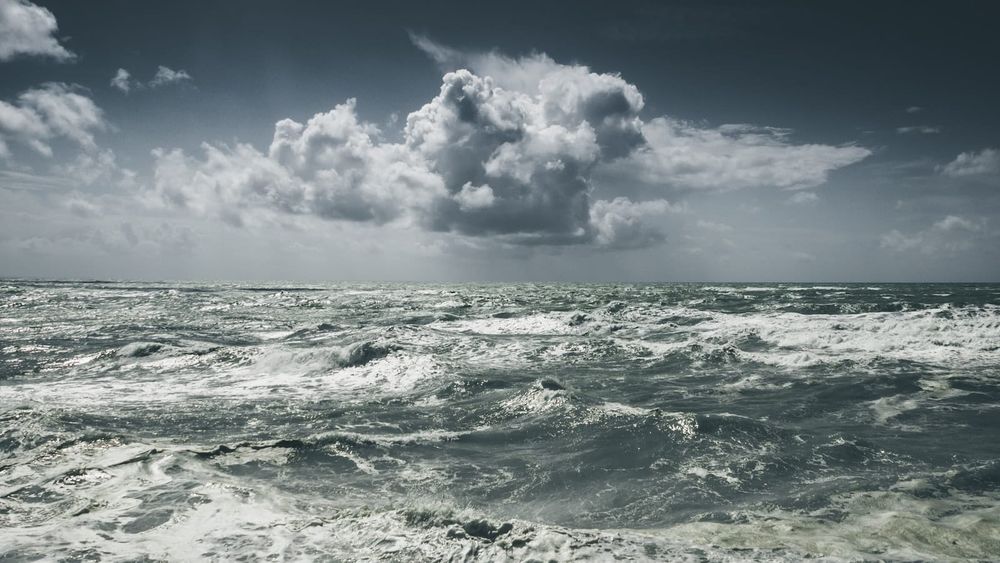
Heaving-to is the maneuver most cruisers know exists and most cruisers have never actually performed in 35 knots. It is also the maneuver that, in the right conditions, will let you eat a hot meal, sleep two hours, repair a torn jib, or wait out a 12-hour squall line - in roughly the same patch of ocean, with no one on the helm.
It works on most monohulls. It works imperfectly on most modern fin-keel boats with spade rudders. It does not work well on multihulls. And it has four common ways to fail.
The Setup, in Plain Language
You are heading into the wind. You back the working jib (haul it across, hard, so it is filled on the windward side). You let the mainsail out and trim it to keep the boat from rounding up. You lock or lash the helm to leeward (away from the wind). The boat will settle on a heading roughly 50 to 60 degrees off the wind, drifting downwind at 0.5 to 1.5 knots, with the backed jib trying to push the bow off and the rudder trying to push the bow up. The two cancel out. You are now stopped, more or less, in a stable angle to the seas.
The point is not zero motion. The point is predictable motion. A properly hove-to boat will slip downwind, leave a calm slick to windward (the slick really does suppress breaking wave faces - this is real, not folklore), and present its forward quarter to the seas instead of getting rolled by them on the beam.
What to Expect in Real Numbers
On a 40-foot cruising sloop in 30 knots and 8-foot seas:
- Heading: 50 to 60 degrees apparent off the wind, occasionally pumping to 70.
- Drift: 0.8 to 1.2 knots, mostly downwind with a small leeward component.
- Heel: 12 to 18 degrees, steady. Less than you would heel beating in the same breeze.
- Slick to windward: 50 to 100 meters of suppressed water. Watch a wave roll into it from upwind - it loses its top.
On a Bermudan-rigged catamaran, none of this is true. A cat will not heave-to in a stable heading. Cats use parachutes or run off; they do not use this technique.
The Four Common Failures
1. Wrong sail combination. A full main and a 130-percent genoa will overpower the rudder and you will slowly fore-reach (sail forward) at 2 to 3 knots, which is not heaving-to, that is just slow sailing. Use the smallest jib you carry (a working jib, a staysail, or a deep-reefed main alone) and a deeply reefed mainsail. The boat should be powered enough to hold heading but not enough to drive forward.
2. Too far from the wind. If your hove-to angle is more than 70 degrees off the wind, the seas will start hitting your beam and the boat will roll. Bring the bow up: more main, ease the jib backed-pressure, or move the helm.
3. The fin keel that won't grip. Modern boats with high-aspect fin keels and spade rudders will sometimes walk forward at 2 knots no matter what you do. If your boat does this, the workaround is a deep-reefed main and a backed staysail (not a jib), or a sea anchor off the bow. Try heaving-to in 25 knots in a familiar area before you need it in 40 knots in the dark.
4. Forgetting to check drift. A 1-knot drift in a 12-hour squall is 12 nautical miles. If you are 15 miles off a lee shore, you have less than that in real terms once you account for current. Plot your downwind drift before you heave-to. Always.
When to Use It
Heaving-to is the right answer in three situations: a passing front you want to wait out, a boat problem you need to fix (torn sail, fouled prop, sea-sick crew), or as a controlled rest in moderate weather offshore. It is not a survival storm tactic in 50-plus knots and breaking 20-foot seas. In that range you are talking about lying ahull, running off with warps, or a series drogue. Heaving-to is the workhorse for everything below the storm survival threshold.
Practice it in 18 knots in your home waters. Do it three times. Time how long it takes to set up. Note your drift heading on the GPS. The first time you actually need to heave-to, in 32 knots offshore at 0300, you will be glad you have the muscle memory.