Twin Gennakers with Structured Luffs: A New Era for Shorthanded Downwind Cruising
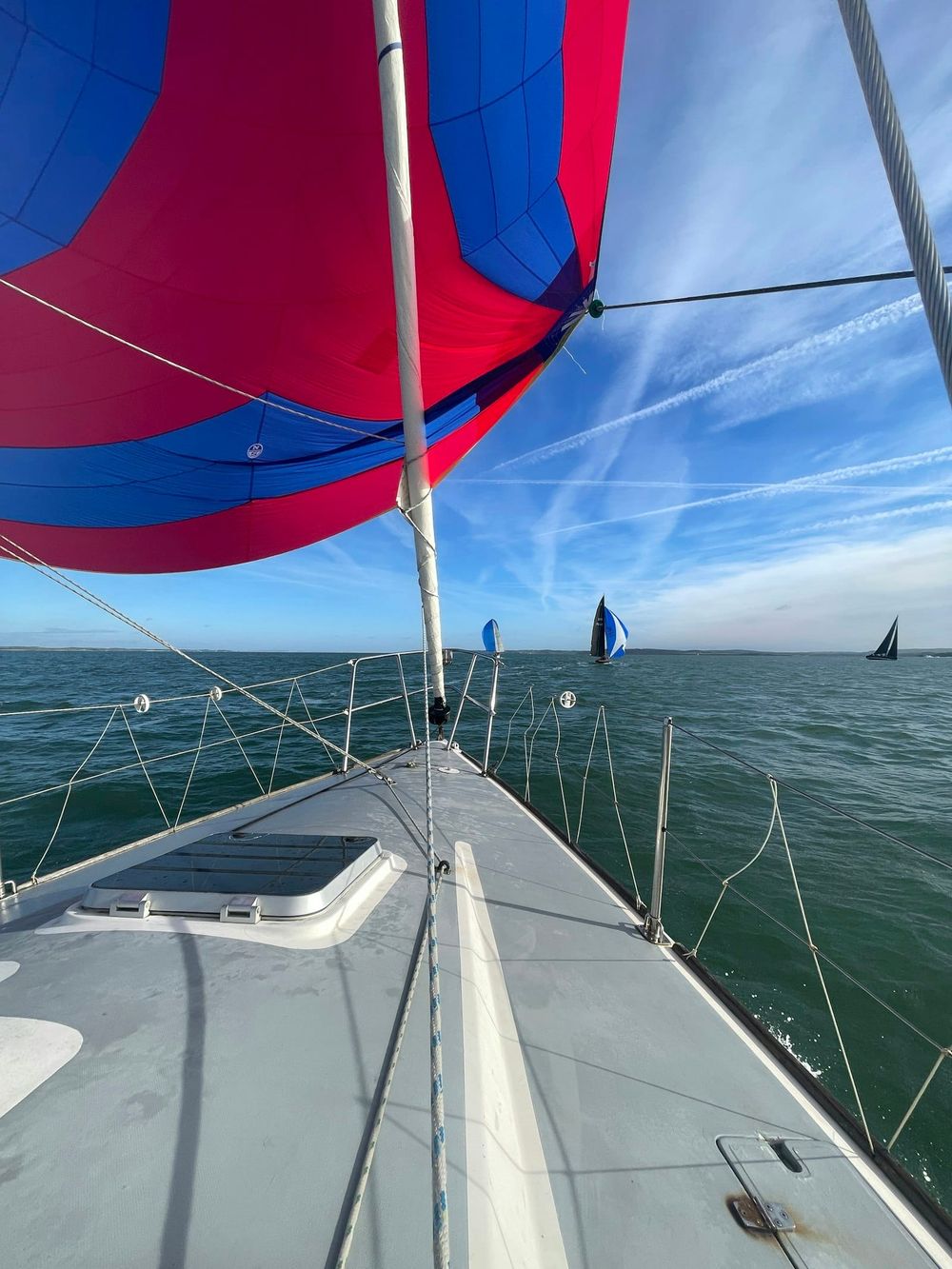
For the past three decades, downwind sailing on a cruising boat has meant choosing between compromise options. A symmetric spinnaker gives you maximum projected area but requires a pole, multiple trim lines, and a sail locker ritual that most shorthanded crews learn to avoid. An asymmetric gennaker simplifies handling but struggles to go genuinely dead downwind, forcing long gybes that eat up miles. The new generation of twin gennakers with structured luffs, now being shown at the 2026 European boat shows, is the most practical answer to this problem we've seen in a generation of bluewater cruising.
What Is a Structured-Luff Twin Gennaker?
The concept is elegant. Rather than joining the traditional spinnaker at a single head and tack, the twin gennaker design uses two matched gennakers sharing a common head swivel and two independent tacks. Each sail has a structured luff — a laminated luff tape that holds its own shape under load, eliminating the need for a heavy anti-torsional cable or top-down furling line. The result: a sail plan that can be set as a conventional wing-and-wing rig off the wind, furled easily without a dousing sock, and reconfigured for reaching by retiring one of the two clews to the centerline.
Sailmakers Elvstrøm, North, and OneSails all have competing versions in the market now. The key design variable is the bridle geometry at the head — some designs use a free-flying swivel, while others integrate a three-way soft shackle that distributes load across both luffs more evenly.
How It Sails
Downwind in 12 to 22 knots true, the twin gennaker offers genuine dead-downwind sailing on a rhumb line course. The two clews are sheeted independently to opposite jibing points — typically a pole to windward and the genoa track to leeward — and the sail sets with surprising stability. Most crews find the rig tolerant of apparent wind angles between 135° and 180°, which covers nearly all classic trade-wind work.
Set as a single sail by retiring one tack, the same gennaker can be flown as a conventional A2 down to apparent wind angles of about 110°. That versatility is the practical revolution — one sail covers the downwind range that previously required two separate inventory items.
Handling and Storage
The furling story is where this design earns its place on serious offshore boats. Because each luff is structured, the sail can be furled onto a top-down drum without the weight and cost of an anti-torsion cable. Furling is quick, typically under 30 seconds for an experienced two-person crew, and stowage on the foredeck is manageable.
For bluewater passages, the sail lives on the drum in a breathable fabric sock, ready to deploy from the cockpit. Most crews never touch the sail except during set and recovery — a dramatic improvement over symmetric spinnakers that demand regular deck trips.
Considerations for Shorthanded Crews
Several factors warrant thought before ordering one:
- Rig loads — flying a full-size twin gennaker generates significant loads on the mast head and forestay. Older rigs may need a rigger's assessment before fitting
- Sheet leads — the sail needs turning blocks on the toerail and clean leads aft to the cockpit winches; some older cruisers will need additional hardware
- Cost — expect to pay 20-30% more than a comparable asymmetric gennaker, plus the cost of a proper furling drum
- Lazy jib handling — with one jib furled behind the twin gennaker, setting the jib back up on a gybe requires thought and practice
Verdict
For couples and shorthanded crews committed to long trade-wind passages, the twin gennaker with structured luffs is the most significant downwind sail innovation since top-down furling arrived. It solves the dead-downwind problem without forcing you to relearn spinnaker handling, and it packs away into a single drum — the kind of simplification that matters when you're trying to sail an Atlantic crossing with a crew of two. Expect to see these on the foredecks of most new bluewater cruisers within the next five years.