Spring Commissioning for the Offshore Sailor: The Systems That Matter Most

Spring commissioning is a ritual every sailor knows, but if you're preparing for offshore passages rather than weekend daysails, the stakes are different. A failed impeller on a bay cruise means a tow home. A failed impeller 200 miles offshore means you're troubleshooting in a seaway with no mechanic on speed dial. Here's where to focus your attention this April.
Start With the Diesel — It's Your Most Neglected Crew Member
Your engine doesn't get enough respect until it stops working. If you winterized properly, you changed oil and filters in the fall so dirty oil wouldn't sit in the pan all winter. If you didn't — and be honest with yourself — do it now before the boat goes back in.
Beyond the basics, bluewater boats need a deeper look at the fuel system. Inspect every inch of fuel line, including fill and vent hoses, for softness, brittleness, or cracking. Check all joints for leaks and confirm that lines are supported with non-combustible clips. Diesel bug thrives in tanks that sat with air space over winter — pull a fuel sample from the bottom of your tank and check for water separation or dark sludge. If you see either, treat the tank with a biocide and plan to run the fuel through a polishing filter before you trust it offshore.
The raw water cooling system deserves special attention. Replace the impeller — don't inspect it and decide it looks fine for another season. Impellers are cheap insurance. Check cooling hoses for stiffness or cracking, and make sure every hose is double-clamped with marine-grade stainless steel. While you're at it, verify your heat exchanger zincs haven't wasted away over winter.
Finally, audit your engine spares locker. You should have aboard: fuel filters (primary and secondary), oil filters, a spare impeller with gasket, spare belts, coolant, engine oil, and hose clamps in every size your engine uses. If you're heading offshore, add a spare injector and a raw water pump rebuild kit.
Rigging: Where Failure Is Not an Option
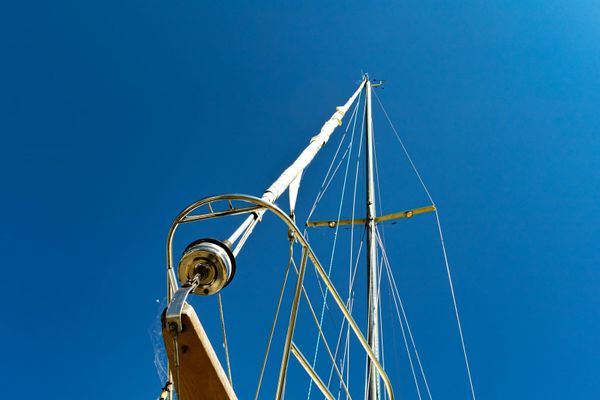
Standing rigging inspections aren't glamorous, but they're non-negotiable for anyone going offshore. Start at the top — either go up the mast yourself or send someone you trust. Inspect every swage fitting, toggle, and clevis pin. Look for hairline cracks in swage terminals, particularly at the transition where the wire enters the fitting. These cracks can be invisible from deck level but catastrophic at sea.
On deck, work through every turnbuckle. Check barrels for cracks and studs for crevice corrosion. Verify that cotter pins are in place and bent back properly — then tape them. Inspect lifelines with particular attention to where wire enters terminals, a prime spot for hidden corrosion.
Running rigging is easier to assess: look for chafe, glazing, and stiffness in halyards and sheets. Any line that's been sitting in a clutch all winter under load may have a permanent compression set that weakens it. If a halyard is more than five seasons old and you're planning ocean passages, replace it. The cost of Dyneema is nothing compared to losing your main halyard in the trades.
Electrical: The System That Sinks More Passages Than Weather
Corrosion is the silent killer in marine electrical systems. Start at the battery bank: clean terminals with a wire brush, check electrolyte levels if you have flooded cells, and load-test every battery. A battery that reads 12.6V at rest but drops below 10V under load is finished — don't trust it offshore.
Trace your main power cables from battery to panel and check every connection point for green corrosion or looseness. A single corroded connection in a charging circuit can leave you without power to run your instruments, autopilot, or navigation lights — all of which become rather important on a night watch 500 miles from land.
Test every piece of navigation electronics, every light, and every pump. Run the bilge pump manually and on the float switch. Test your VHF on a radio check. Power up your radar and chartplotter and verify GPS acquisition. If you have an AIS transponder, confirm it's transmitting by checking your vessel on MarineTraffic or a similar service.
Safety Gear: The Stuff You Hope You Never Need
Inspect PFDs for UV degradation, mold, and proper function of inflatable mechanisms. Check the hydrostatic release and service date on your life raft — if it's due this year, get it serviced before the season, not after your first passage. Verify fire extinguisher pressure gauges are in the green and check manufacturing dates; many disposable extinguishers expire 12 years after manufacture.
Check your flare kit dates, EPIRB battery expiration and registration, and ensure your ditch bag is current and accessible.
The Payoff
Spring commissioning done right isn't a chore — it's the foundation of every good passage you'll make this season. Boatyards are already getting slammed with work this time of year, so if you need professional help with any of these systems, book it now. The sailors who launch confidently in May are the ones doing this work in April.