Cruising New Zealand: The Pacific Sailor's Best-Kept Layover
Your complete cruising guide with anchorages, clearance tips, and local knowledge.
New Zealand occupies a peculiar place in the cruising world. Almost nobody sails there as a primary destination. Almost everybody who arrives wishes they'd planned more time. The country sits at the bottom of the Pacific milk run — the place where boats go to ride out cyclone season — and most cruisers treat it as a maintenance stop between the tropics. That's a mistake roughly equivalent to stopping in Tuscany for an oil change and driving straight back to the highway.
New Zealand is a world-class cruising ground hiding behind a reputation as a boatyard.
Getting There
Most cruising boats arrive in New Zealand from Fiji or Tonga during the October-November weather window. The passage is roughly 1,100 nautical miles from Fiji to Opua (Bay of Islands) — a 7-10 day passage that crosses the transition zone between tropical and temperate weather systems.
This is the most weather-dependent passage on the Pacific milk run. The route crosses the convergence zone where tropical high-pressure systems meet the mid-latitude westerlies, producing rapidly changing conditions. A good weather window provides 5-7 days of manageable winds on a southwesterly course. A bad window delivers gale-force headwinds, frontal passages, and dangerous cross seas.
The protocol: monitor the weather models for at least a week before committing. Consult with a professional weather router if you're not confident in your own analysis. Buddy-boat with experienced cruisers if possible. The Fiji-New Zealand passage has a serious reputation for a reason — respect it.
Opua in the Bay of Islands is the standard port of entry. The customs and biosecurity clearance process is thorough — New Zealand's biosecurity is among the strictest in the world. Every food item aboard will be inspected. Honey, fresh produce, meat, and certain seeds will be confiscated. Wooden items may be inspected for insects. The boat's hull may be inspected for biofouling. Prepare by consuming or disposing of prohibited items before arrival, and approach the process with patience.
The Bay of Islands
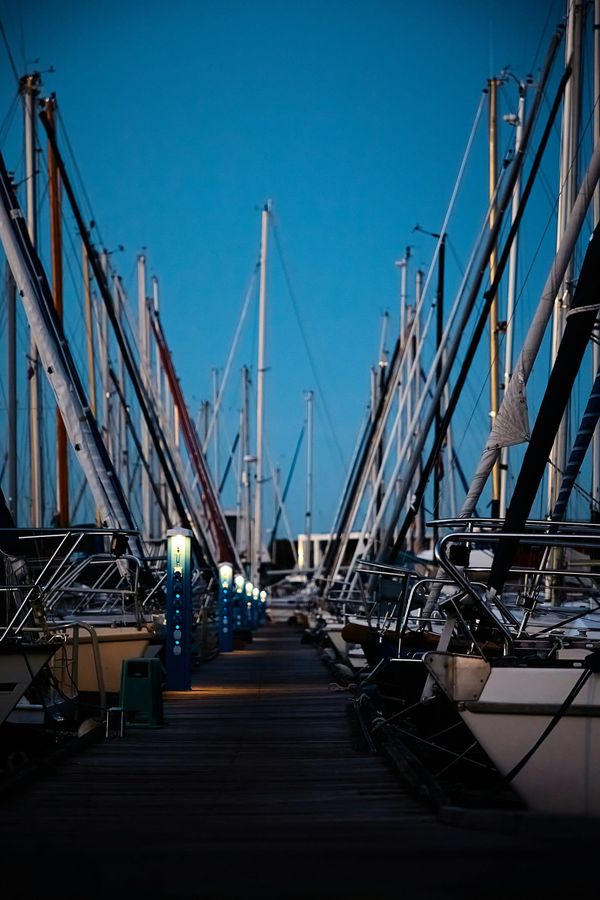
The Bay of Islands is where most cruisers spend their first weeks — and where many stay for months. The bay contains over 140 islands, countless anchorages, and a cruising community that forms every November as the Pacific fleet arrives.
Opua is the marina hub — a small town with yacht services, a customs office, and access to the larger town of Paihia and the historic settlement of Russell across the bay. The marina is functional and affordable by international standards. The anchorage in the Veronica Channel is well-protected and within dinghy distance of services.
The cruising within the Bay is exceptional. Roberton Island, Moturua Island, and the outer islands provide deserted anchorages in stunning scenery. The water is clear (though not Caribbean-clear), the holding is good in sand and mud, and the tidal range is moderate (2-3 meters). Fishing is productive — snapper, kingfish, and kahawai are catchable from the dinghy.
The Hole in the Rock at Cape Brett and the outer islands toward the Poor Knights offer spectacular diving — the Poor Knights are consistently rated among the world's top ten subtropical dive sites.
The North Island
Beyond the Bay of Islands, the North Island offers diverse cruising that rewards exploration.
Whangarei is the boatyard capital of New Zealand cruising. The Town Basin marina puts you in the center of a pleasant small city, and the surrounding yards (Dockland 5, Norsand, Riverside Drive) handle everything from a routine haul-out to a complete refit. Labor rates are roughly half of US or European equivalents, and the quality of work is generally high. Whangarei is where most cruisers do their major maintenance — the annual haul-out, the rig inspection, the engine service — before heading back to the tropics.
Hauraki Gulf and Auckland. The Hauraki Gulf is Auckland's sailing playground — dozens of islands, hundreds of anchorages, and a sailing culture that's embedded in the city's identity. Great Barrier Island, on the gulf's eastern edge, is wild and beautiful — a miniature New Zealand with rainforest, hot springs, and anchorages that empty out entirely midweek. Waiheke Island is closer to Auckland and more developed, with vineyards, restaurants, and a ferry connection to the city.
Auckland itself is the City of Sails — more boats per capita than anywhere on earth. The Viaduct Harbour and Westhaven Marina are in the heart of the city. Provisioning, chandleries, and marine services are excellent. The city has direct international flights — useful for crew changes and parts shipments.
Coromandel Peninsula. East of Auckland, the Coromandel coast offers protected anchorages, golden beaches, and some of the best kayaking in the country. The water temperature in summer (December-March) reaches 20-22°C — not tropical, but swimmable.
The South Island
The South Island is where New Zealand's landscape reaches its full dramatic potential. The Marlborough Sounds — a labyrinth of drowned river valleys at the northern tip of the South Island — provide hundreds of miles of sheltered waterways surrounded by native bush. The anchorages in Queen Charlotte Sound and Pelorus Sound are deep, protected, and uncrowded outside the holiday period.
The weather in the Sounds is more changeable than the North Island — fronts sweep through with less warning, and the topography funnels wind through the valleys unpredictably. But the protection of the enclosed waterways means you're never far from shelter.
Fiordland. The southwest corner of the South Island is one of the most spectacular cruising grounds on earth — and one of the most demanding. Milford Sound, Doubtful Sound, and the remote fiords further south offer vertical granite walls rising thousands of feet from water hundreds of meters deep, waterfalls cascading directly into the sea, and wildlife (dolphins, seals, penguins, and the occasional whale) in abundance.
The challenges are real. Fiordland receives 6-8 meters of annual rainfall. Frontal weather systems arrive from the Tasman Sea with little warning, and wind acceleration through the fiord valleys can be extreme. Anchoring is difficult — the fiords are deep (100+ meters in many places) and the bottom is steep. Cruisers use shore lines — running a line from the bow to a tree on shore while anchoring with the stern hook in whatever depth is available. This technique requires practice and proper gear (100+ meters of floating line).
Fiordland is expedition cruising within a first-world country. It's cold, wet, remote, and absolutely worth the effort.
The Practical Details
Season. November through April is the cruising season. The austral summer (December-February) offers the warmest weather and longest days. March and April are autumn — cooler, but often the most settled weather of the year. Winter (May-September) is cold, wet, and windy — most cruising boats are hauled or in a marina.
Costs. New Zealand is moderately expensive. Marina fees are NZD $30-50/night for a 40-45 foot boat (roughly USD $18-30). Anchoring is free everywhere. Provisioning from supermarkets (Countdown, New World, Pak'nSave) is comparable to US prices. Eating out is more expensive than Southeast Asia but less than Europe. Diesel is roughly NZD $2.00-2.50 per liter. Boatyard rates are NZD $60-100/hour for skilled labor.
Immigration. Most nationalities receive a 3-6 month visitor visa on arrival. Extensions are possible through Immigration New Zealand. The boat can remain in New Zealand for up to 2 years on a temporary import permit before customs duty becomes an issue.
Biosecurity. New Zealand's biosecurity regulations are strict and enforced. Hull biofouling is a particular focus — the hull must be substantially free of biofouling on arrival. If you're arriving from a tropical port with a growth-covered bottom, arrange a haul-out and bottom clean before making the passage. New Zealand MPI (Ministry for Primary Industries) can refuse entry to heavily fouled vessels or require an immediate and expensive haul-out and clean at the owner's expense.
The Departure
Most boats depart New Zealand in May or June, heading northwest toward New Caledonia, Vanuatu, or back to Fiji and Tonga — rejoining the westward circuit toward Australia and the Indian Ocean, or looping back for another Pacific season.
The departure passage north is generally easier than the arrival — you're sailing with the prevailing weather patterns rather than against them, and the convergence zone crossing is typically less dramatic in the May-June window.
The Case for Staying
New Zealand rewards the cruiser who lingers. The country is safe, clean, spectacularly beautiful, and populated by people who are generous, pragmatic, and genuinely interested in the boat that just sailed in from Fiji. The marine infrastructure supports the cruising fleet with a completeness that few countries in the Pacific can match. The sailing — from the subtropical Bay of Islands to the sub-Antarctic fiords — spans a range of conditions and scenery that most cruising grounds can't touch.
Many cruisers plan to spend one cyclone season. Some stay for two. A few sell the boat, buy a house, and never leave. It's that kind of place.
References: Royal Akarana Yacht Club cruising guides, New Zealand Hydrographic Authority, Noonsite New Zealand, Island Cruising Association, cruising community reports