Horta and the Azores: The Atlantic Crossroads Every Bluewater Cruiser Should Plan For
For a cruiser sailing the Atlantic from either direction, the Azores are the waypoint that turns two passages into one. Horta, on the southeast corner of Faial Island, has been the Atlantic's unofficial crossroads for the better part of a century, and a boat that plans the timing and the approach right comes into a harbor that knows exactly what to do with a tired offshore crew.
The case for Horta. A west-to-east crossing from the Caribbean, the US East Coast, or Bermuda naturally funnels toward the islands — the Azores High pushes the great-circle routing north of the archipelago in July and August, and Horta sits right underneath that line. A boat leaving Bermuda in early June is looking at 1,700–1,900 miles to the Faial approach, depending on how hard the high squeezes the routing. Fifteen days is a reasonable passage time for a 40-footer in a normal season; twelve is fast; eighteen is patient.
Going the other way, eastbound boats heading for the Caribbean or Central America in October-November use the Azores as the dropping-off point before they commit to the Atlantic crossing. The timing window is narrower — the North Atlantic low track is waking up through October, and boats want to be through the Azores and south of 30 North before the first serious fall gale sweeps across. That's a harder window to hit than the westbound run.
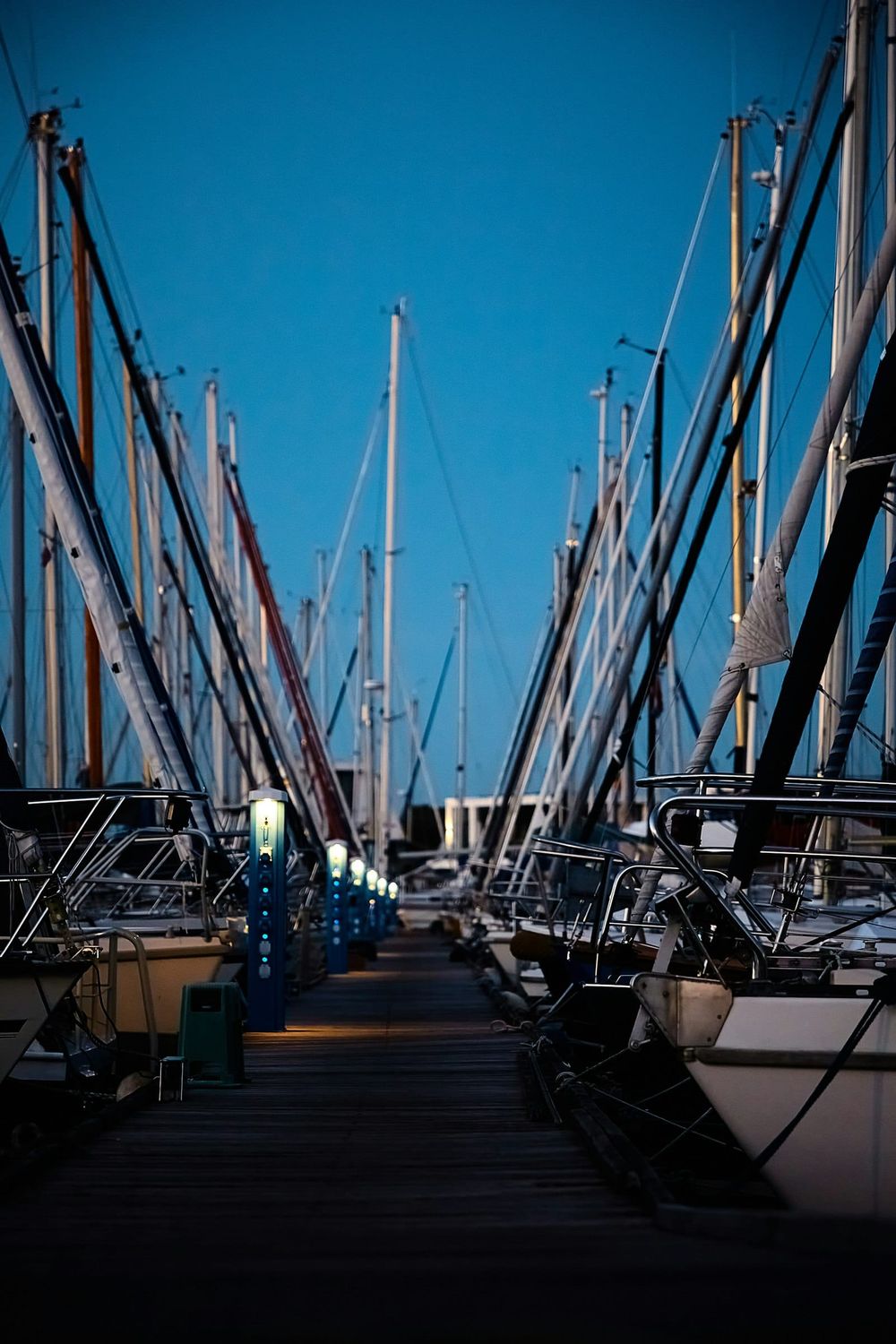
The Horta harbor itself is small by Mediterranean standards — 250-ish berths, most of them med-moored, plus a generous marina anchorage in the outer basin when the main pontoons fill up. The harbor master's office at the Clube Naval de Horta is where you check in; they'll hand you a form that also works for customs clearance if you're arriving from a non-Schengen port. The paperwork is efficient, cheap, and doesn't require an agent — unusual for Europe and a relief after the bureaucracy at Gibraltar or Lisbon.
The fees. Marina rates run around €25–35 per night for a 40-footer in season, less in shoulder months. Anchoring is free in the outer basin but the holding is marginal — a thin sand layer over rock and the occasional old cable — so set the anchor hard and dive on it when the weather allows. The trade wind acceleration zone funnels down between Faial and Pico in the afternoons, and in August a sustained 25 knots from the northeast inside the harbor is not unusual. Boats dragging in Horta anchorage is a regular event; reading the other boats' track lines on your plotter at dusk is part of the ritual.
Weather routing in the region has its own character. The Azores High defines the entire approach — when the high is far north, boats get reaching conditions all the way to Faial; when it's sitting on the islands themselves, the last 200 miles turn into close-hauled bashing in 20-plus knots. A weather router worth the money (Chris Parker, Commander's Weather, or one of the European services) pays for itself on this stretch — if only to tell you when to hold in Bermuda or when to leave the US coast on an aggressive window.
The island fleet scene. The ARC Europe fleet arrives from the Caribbean in May; the ARC Azores event runs its own rally through July; and the World ARC fleet transits on its way home from a circumnavigation. Between those events, there's a steady trickle of independent cruisers, delivery skippers, and the occasional racing boat on its way to or from a Transat. The net effect is a harbor that has seen every kind of boat and every kind of crew condition, and local services — riggers, welders, sailmakers, mechanics — are better than you'd expect on an island of 15,000 people.
Peter Café Sport. The bar across from the marina is the one you've read about. It's also a working institution — the wall of visiting-boat paintings is real, and the harbor mail service they used to run (now largely replaced by email, but still active for real parcels) has been part of the North Atlantic cruising culture since the 1930s. Eat the salt-cod fritters, drink the gin-tonico, and don't be precious about it. The place is what it is because it's been earned.
The repair economy on Faial is underrated. If you blew a chainplate in the middle of the Atlantic, Horta is the place to fix it. Mid and Alvyn Sainz's shop (a holdover rigger from the old Transat era) handles anything stainless; António Mendes does carbon and composite; and the sailmaker at Maltez Sails has turned around a ripped main in 48 hours for boats continuing onward. The reason the ecosystem works is volume — the harbor sees enough transiting offshore boats that specialists make a living at it, which means the tools, the parts, and the know-how are all locally present. That isn't true of a lot of mid-Atlantic stopover options.
Getting to São Miguel. Horta is one of nine Azorean islands, and most cruisers plan a triangle: Horta on Faial, Madalena on Pico for a night or two, and Ponta Delgada on São Miguel if they're flying crew in or out. Ferry service between Faial, Pico, and Terceira is reliable and cheap; the SATA Azores Airlines flights to Ponta Delgada are frequent. For a boat doing a 60-day Atlantic cycle, two weeks in the island group is typical.
The thing nobody tells you until you're there: the weather is more Scotland than Mediterranean. July and August have warm days and cool nights, and the cloud ceiling sits on top of Pico Volcano most mornings. Bring foul-weather gear, not just shorts. The boats that cross the Atlantic and haven't had their oilskins out in a week get a reminder on the approach.
For a bluewater cruiser, the Azores aren't a stopover; they're the pivot that makes a two-ocean year possible. Plan the timing, book the berth ahead if you're transiting in the ARC weeks, and leave room on the schedule. Most boats that arrive on a 72-hour turnaround plan end up staying ten days. That's the island's compliment to you.