Palanad 4: The Scow-Bow 50 That Is Testing IRC's Patience
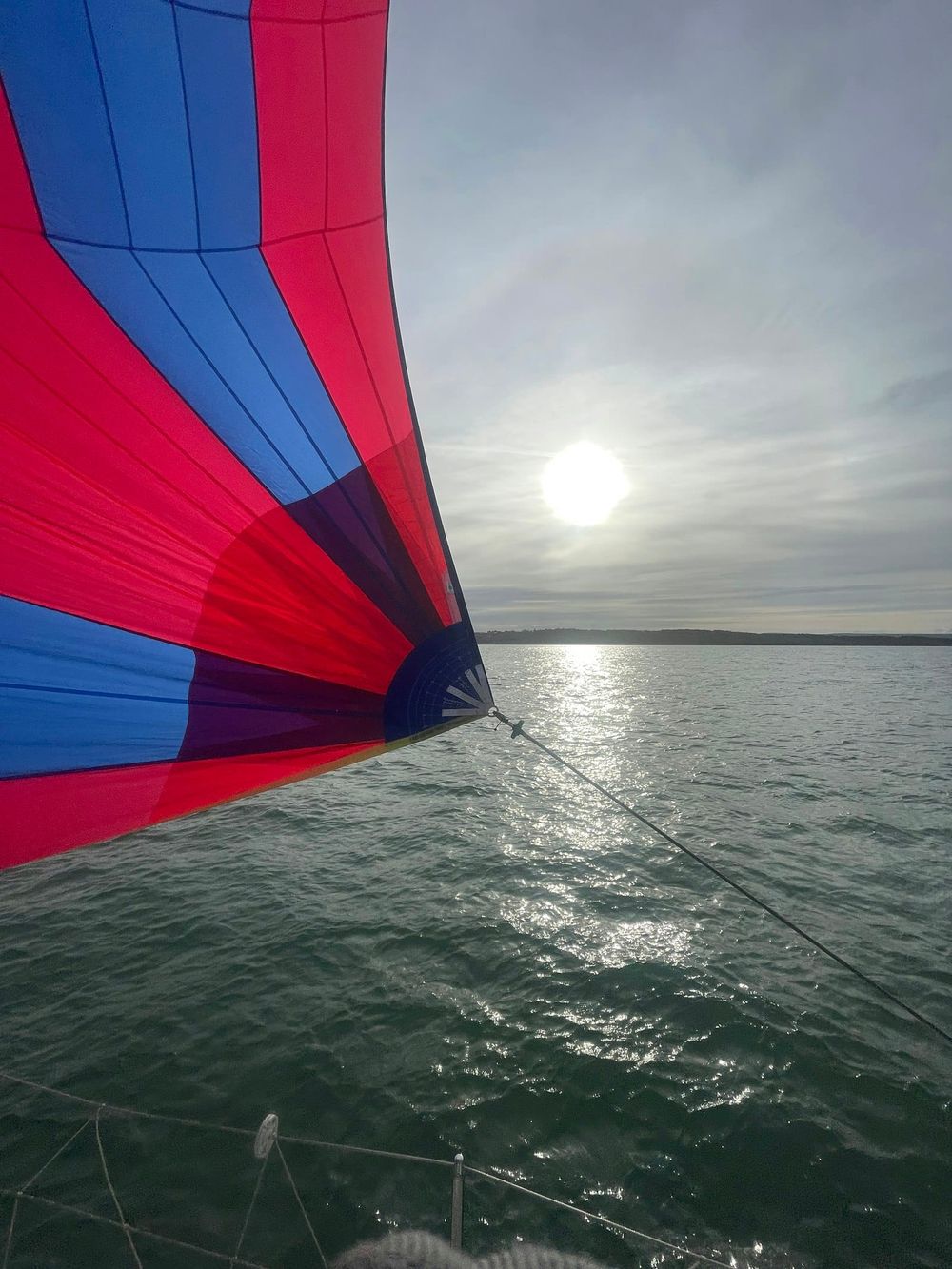
Palanad 4 — the new Sam Manuard–designed 50-footer that launched this spring — is the kind of boat that makes IRC handicappers reach for their phones. It takes the scow-bow concept that has dominated offshore Mini 6.50 and Class40 design for the last six years and scales it up to a cruiser-racer hull that's clearly built for serious offshore work and not just an inshore trophy hunt.
A scow bow, for readers who've been away from the design conversation, is the blunt, almost flat-nosed front end pioneered by David Raison in the Mini class. Instead of the fine entry that boats have used since forever, a scow presents a wide, planing surface to the water. The consequence — in the right conditions — is earlier planing, more stable angles off the wind, and less pitching as the boat transitions between troughs and crests. The tradeoff is in upwind performance (the blunter bow pays a pounding and drag penalty) and in handicap. IRC has historically been hostile to the geometry.
Palanad 4 scales that up to 50 feet and makes a couple of bets that, if they pay off, reshape the shorthanded racer-cruiser category. First bet: that the VMG penalty upwind is smaller than IRC's rating suggests for a boat this size. Second bet: that the off-wind speed gain is large enough to offset the rating penalty on mixed courses — which describes most of the offshore distance races the boat will enter. Third bet: that the hull shape is actually livable for a cruising owner who wants to take the boat across the Atlantic and anchor it in 25 feet of water, not just drive it to a buoy and back.
Specs worth noting. The boat displaces around 9 tons, rigged with a carbon mast that's short by modern race-boat standards to favor shorthanded handling. The J-dimension is wider than typical for the LOA, which pushes the sailplan forward and keeps the main inside the rating window. Water ballast is standard (the French design tradition) at around 400 liters per side, with transfer time targeted under 60 seconds. There are twin rudders, canted slightly outboard, because with the hull this wide you need the second rudder deep in the water when the boat heels past 15 degrees. Draft is 3.2 meters on the racing option, 2.4 meters on a lifting keel version aimed at cruiser-racer buyers who want to get into shallower anchorages.
Interior is the interesting part for owners considering one. The scow-bow volume gives you a bigger forward compartment than a comparable fine-entry 50-footer — some drawings have been circulating showing a proper forward cabin with a real double berth instead of the crash-pipe storage hole a racer-cruiser usually gets. The saloon is wider than on a Class40-style layout, because the beam carries further forward. That's liveable for a couple or a family on a long passage and not just a place to stash sailbags.
The IRC problem is real. IRC's rule authors have been conservative about scow geometry since the Class40 scow controversy, and early indicators suggest Palanad 4's rating sits higher than a fine-entry boat of identical length and displacement. That means on a boat-for-boat basis in a buoy race, Palanad 4 needs to crush a Class40-style competitor to correct out. That's possible in 15 knots and above. In 8–12 knots of breeze upwind, it's unlikely. Owners interested in the boat need to pick their racing calendar carefully — mixed offshore distance races with reaching legs are where the boat shines. Windward-leeward buoy racing in light air is where it will bleed rating time.
For short-handed offshore, the boat is strong. The wide, stable hull is a known advantage when a single helmsperson is awake at 3 a.m. and the autopilot is steering. The early-planing characteristic means a solo skipper sees higher average speeds through the easy-reaching conditions that dominate Transat routes. The downside in heavy conditions is managed with a conservative sailplan — the third reef and small staysail are sized for the worst of a North Atlantic low, and the water ballast transfer system is designed to be worked single-handed without leaving the cockpit.
Build quality out of the yard so far looks solid. The prepreg carbon laminate is the high-end option, which keeps displacement down and lets the boat hit its designed speed targets — but pushes the price point into the €1.5M-plus range. A glass/foam build option is on the yard's drawing board at a lower displacement penalty and a sharper price, targeted at the cruising owner market.
Two or three of these boats racing next year will tell us whether the scow-bow hull form has legs at the 50-foot size. If it wins the right races — Fastnet, Middle Sea, the Atlantic Rally's racing division — it rewrites the design conversation for the next generation of cruiser-racers. If it finishes mid-pack because IRC rates it punitively, it becomes a curiosity: fast, fun, and unhandicappable.
Worth watching. The Manuard office has been right more often than it's been wrong over the last decade, and the scow-bow bet has paid off at every scale it's been tried. The open question is whether 50 feet is where the form finally meets a size ceiling, or whether it keeps working the way the naval architects on the drawing boards believe it will.