Ground Tackle Decoded: Anchors, Rode, and Snubbers for Bluewater Cruising
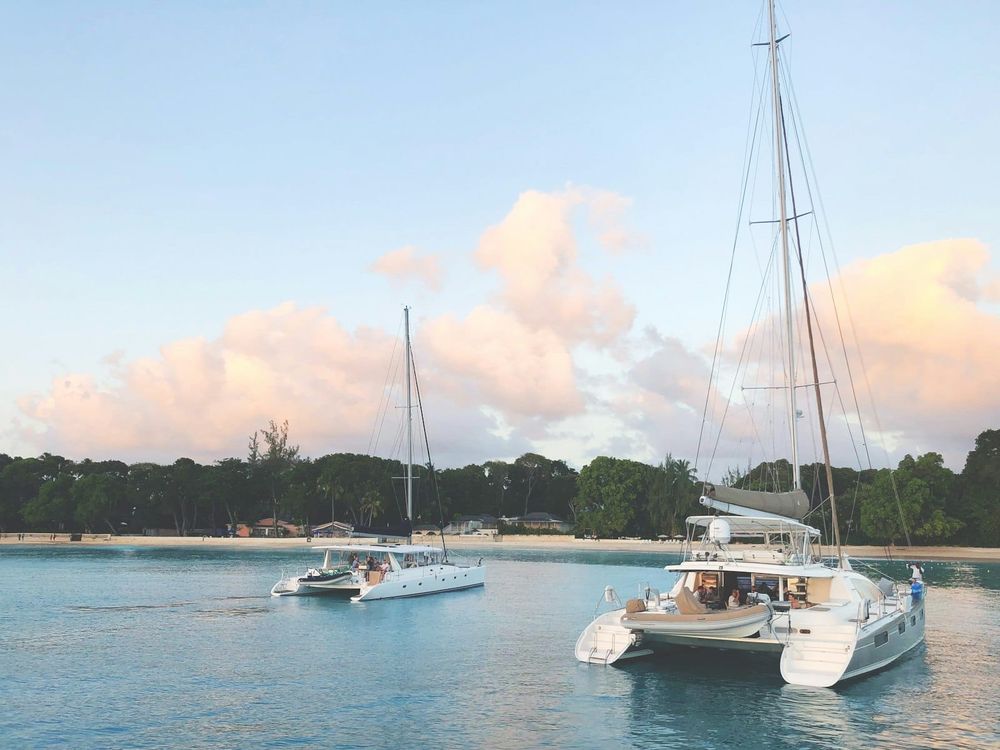
The anchor is the single most important piece of equipment on a bluewater cruising boat. It is the difference between a peaceful night and a 3 a.m. dinghy ride to a dragging neighbor. Yet most production boats leave the factory with ground tackle sized for fair-weather coastal use, and many owners never revisit the math until the first real blow exposes the gap. Here is how to think about it properly.
Sizing the Hook
Manufacturers publish sizing charts based on boat length, but length alone is a poor proxy for load. Windage, displacement, and beam drive the real numbers. A reasonable rule of thumb for offshore cruising boats: size the primary anchor one or two steps above the manufacturer’s recommendation for your boat’s length, and target 1.5 pounds of anchor per foot of boat for a modern design like a Rocna, Mantus, Spade, or Ultra.
The modern generation of scoop and concave-blade anchors — Rocna, Mantus M2, Spade, Ultra, and Vulcan — has genuinely outperformed the old CQR and Delta in real-world testing. Fortress aluminum anchors remain the gold standard for soft-mud holding, particularly in Chesapeake-style anchorages, and they belong in every bluewater kit as the stern anchor or the Bahamian moor second. A boat cruising seriously offshore should have three anchors aboard: a primary scoop, a Fortress or Danforth-pattern secondary, and a storm anchor one size above the primary.
Chain and Rode
All-chain rode is the bluewater standard for good reason — it resists chafe, provides catenary weight, and lets you anchor confidently in coral-strewn or rocky bottoms. G4 or G43 high-test galvanized chain sized to your windlass gypsy is the baseline. Don’t cheap out on chain: a broken link in 35 knots at 2 a.m. is a story you don’t want to tell. Target at least 300 feet of chain for Caribbean and Pacific work; 400 feet if you plan to anchor in the volcanic deeps of the Marquesas or the Tuamotus.
Mark the chain every 25 or 50 feet with paint or Chainmarks. You will forget which mark means what within a week. Write it on a plate near the windlass.
The Snubber Is Not Optional
An all-chain rode transmits shock loads directly to the windlass, the bow roller, and — through the boat — to every fastener and bulkhead in the forward third of the hull. A good snubber absorbs that shock and keeps the windlass from becoming the weakest link. Build yours from three-strand nylon, not double braid; three-strand stretches more and sheds water. Sizing: roughly the same diameter as your anchor rode chain equivalent, or about 5/8 inch for a 35-to-45-foot boat. Attach with a chain hook — the Mantus or Wichard stainless hooks are excellent — and deploy a bridle setup on catamarans.
Length matters. A snubber of 20 to 30 feet gives the nylon room to stretch and do its job. A four-foot snubber is a speed bump on the way to a disaster.
Scope and Technique
For settled conditions in sand, 5:1 scope is fine. For any forecast over 25 knots, run 7:1 and drop the snubber to water level. If you’re in a crowded anchorage, you might not have the swing room for proper scope — in which case move, or accept that the night will not be relaxing. Never anchor bow-to-stern in a blow expecting short scope to hold; it doesn’t.
Set the anchor deliberately. Drop the hook, pay out scope as the boat falls back, then set in reverse at 1500 RPM for a full minute. Watch a transit on shore. If it moves, reset. A properly set scoop anchor in clean sand will not drag in 50 knots. An improperly set one will drag in 15.
The Honest Test
Once a year, in a protected anchorage in settled weather, back down on your rode at full cruising RPM for 60 seconds. If anything moves — the windlass lifts, the bow cleat creaks, the snubber jumps — fix it before you sail offshore. The anchorage is the place to find weak points, not a Grenadian squall.