Working Remotely While Cruising: How to Fund the Dream Without Draining the Savings
Working Remotely While Cruising - practical insights for the bluewater cruiser.
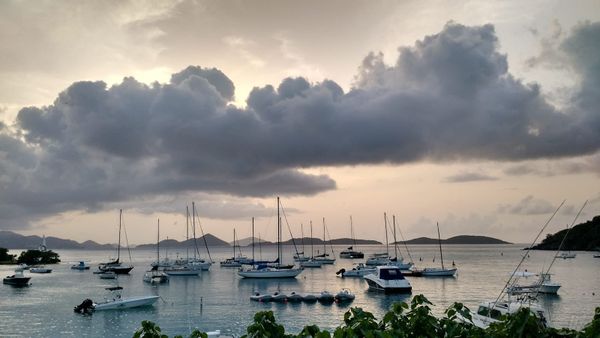
The old model of cruising finance was simple: save enough money, quit your job, go sailing, come home when the fund runs dry. It worked — the Pardeys proved it, and generations of cruisers followed the pattern. But it required either extreme frugality, years of aggressive saving, or an early retirement income stream.
The new model is different. Starlink delivers broadband internet to an anchorage in the Tuamotus. A laptop and a video call connect you to clients in New York from a cockpit in Grenada. The gig economy, remote-first companies, and the normalization of distributed work have made it possible to earn a professional income while living aboard and sailing between countries.
This isn't a fantasy lifestyle blog post. It's a practical guide to the infrastructure, strategies, and trade-offs of working remotely from a cruising boat.
The Connectivity Stack
Remote work requires reliable internet. On a cruising boat, that means a layered approach.
Starlink is the primary connection. The Mini draws 30-50 watts, delivers 50-200 Mbps at anchor, and works in most populated cruising grounds. For video calls, file uploads, and cloud-based work, it's transformative. The regional or global roam plans ($150-200/month) allow you to pause service during passages and reactivate in port.
Starlink's limitation: it doesn't work reliably underway, and coverage gaps exist in mid-ocean and some equatorial regions. For a remote worker, this means your workdays happen at anchor or in marinas, not on passage.
Cellular data as a backup. A marine-grade cellular router (Peplink, Glomex) with a masthead antenna pulls signal from cell towers 10-20 miles offshore. In coastal waters and near populated islands, this provides a fast, low-latency alternative to Starlink. Buy local SIM cards at each new country — data plans are cheap in most cruising destinations.
Iridium GO! or similar as the emergency layer. When Starlink drops and cellular fails, an Iridium device provides enough connectivity for critical emails and text-based communications. It won't support a video call, but it keeps you in contact with clients during those periods when nothing else works.
Structuring the Work
The fundamental tension of working while cruising is that both activities want your best hours. Sailing wants the early morning departure, the midday passage, the afternoon arrival. Work wants the focused morning session, the client call at noon, the deliverable by end of day.
The cruisers who manage this successfully adopt one of two strategies:
The sailing week / working week. Concentrate passage-making into defined periods (weekends, specific days) and keep workdays in port or at anchor with reliable internet. This works best for sailors with flexible schedules who can batch their sailing around their work commitments. The rhythm might be: work Monday through Thursday from an anchorage, sail Friday through Sunday, arrive at the next stop, and set up for another work week.
The four-day workweek. Compress full-time work into four focused days, leaving three days for sailing, exploring, and boat maintenance. This requires efficient work habits and clients or employers who respect the schedule. Many remote workers find they're more productive in four focused days aboard — no commute, no office distractions, no meetings that should have been emails — than in five diluted days ashore.
The seasonal approach. Work intensively for 3-4 months (marina-based, full connectivity, regular hours), then cruise for 2-3 months with minimal work obligations. This aligns well with seasonal weather patterns — work during the off-season when the boat is in a marina or yard, cruise during the prime sailing window.
Time Zone Management
Your boat moves; your clients' clocks don't. A financial consultant based in the Eastern Caribbean is 1-4 hours behind US Eastern time — manageable. The same consultant crossing the Pacific is 10-12 hours off US time — requiring early morning or late evening calls that eat into the quality of both work and cruising life.
Strategies: choose cruising grounds that align with your clients' time zones (the Caribbean and Atlantic work well for US-based work; the Med works for European clients). Shift your working hours to overlap with client business hours — a 0600-1200 workday in the Caribbean covers 0700-1300 Eastern. Communicate your schedule and availability proactively — clients who understand your time zone offset are more forgiving than clients who discover it when you miss a call.
The Workspace
A dedicated workspace aboard sounds like a luxury on a 42-foot boat, but it's a necessity for sustained productivity. The minimum: a chart table or saloon table with good lighting, a comfortable seat with back support (the V-berth is not a workspace), reliable power for the laptop, a noise-canceling headset for calls, and a camera angle that shows something other than your unmade berth.
The background for video calls matters more than it should. A tidy saloon or a cockpit with blue water behind you projects professionalism and — subtly — reminds clients that you're living a life they envy, which is not a terrible dynamic for client retention.
Power management: a laptop draws 30-60 watts. Running a laptop and Starlink simultaneously is 60-110 watts — a meaningful draw during a full workday. Schedule intensive work during peak solar hours and you'll run off the panels without touching the house bank.
Choosing the Right Work
Not every remote job works from a boat. The ideal boat-compatible work has several characteristics:
Asynchronous communication. Work that can be done on your schedule and delivered digitally, rather than requiring real-time presence at specific hours. Consulting, writing, design, software development, financial analysis, online teaching, and project management all fit this model.
High value per hour. Cruising compresses your available work hours. If you're earning $25/hour, you need 40 hours a week to fund comfortable cruising. If you're earning $150/hour, you need 7 hours a week. The math is brutal and clear: optimize for hourly value, not volume.
Location-independent delivery. The work product must be deliverable digitally. Physical product businesses, in-person services, and anything requiring a fixed address are incompatible.
Flexible deadlines. Weather windows, passage timing, and the operational demands of the boat will occasionally override work commitments. Clients and employers who understand this — or better yet, who don't need to know — make the dual life sustainable. Those who demand rigid availability regardless of circumstances will eventually force a choice between the boat and the job.
Tax and Legal Considerations
Remote work from international waters and foreign countries creates tax complexity. The specifics depend on your citizenship, your domicile state, your clients' locations, and the countries you're working from.
US citizens are taxed on worldwide income regardless of where they earn it. The Foreign Earned Income Exclusion (FEIE) may apply if you meet the physical presence or bona fide residence test — consult a tax professional experienced with expatriate taxation before departure.
Establish a business structure (LLC, S-Corp) before departure if you're freelancing or consulting. Set up a registered agent in your domicile state. Maintain a US mailing address and bank accounts. File quarterly estimated taxes. Keep meticulous records of income, expenses, and your physical location.
Some countries restrict or prohibit working on a tourist visa. The enforcement reality varies — nobody is checking whether you're writing code or writing postcards at an anchorage — but the legal exposure exists. Digital nomad visas, offered by a growing number of countries (Barbados, Portugal, Croatia, Greece, and others), provide a legal framework for remote work from a foreign country.
The Honest Assessment
Working while cruising is not the same as cruising. The days you spend at a desk are days you don't spend exploring, maintaining the boat, or simply existing in the present tense of the sailing life. The mental load of client obligations, deadlines, and professional reputation doesn't disappear when you anchor in a beautiful bay — it sits in the background, coloring the experience.
But working while cruising is also not the same as working from home. The commute is a dinghy ride. The lunch break is a swim. The view from the office is a different harbor every week. The freedom to say "I'm taking next week off to sail to the next island" is a freedom that no corner office provides.
The sustainable model is honest about the trade-offs. You will work some days when you'd rather be sailing. You will sail some days when you should be working. The balance is imperfect and constantly renegotiated. But if the alternative is waiting another decade to save enough to cruise without working, the imperfect balance wins.
The boat is out there. The work can come with you. The rest is logistics.
References: Starlink maritime documentation, Cruisers Forum remote work threads, Nomad List, SafetyWing, cruising community reports