Best Handheld VHF Radio for Offshore Sailing: Icom vs Standard Horizon vs Cobra
Our top picks and detailed comparisons to help you choose the right gear for offshore sailing.
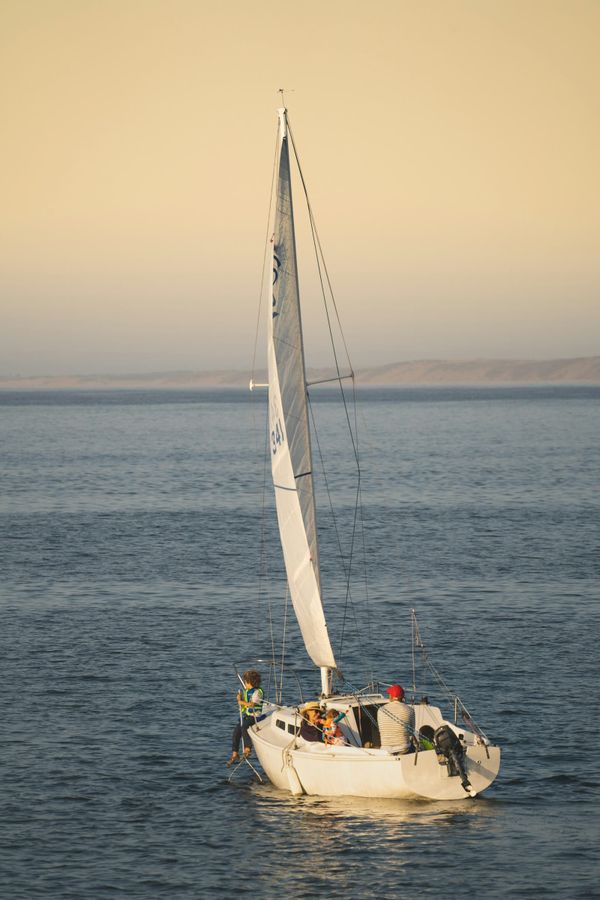
A handheld VHF radio is the backup communication device every offshore boat needs — and for many cruisers, it's also the daily-use radio for dinghy trips, inter-boat communication in anchorages, and the device that lives in the ditch bag as the last line of communication if you abandon ship.
The fixed-mount VHF at the helm is your primary radio. The handheld is the one that goes with you when you leave the boat — in the dinghy, on the foredeck during a sail change clipped to your PFD, and into the life raft if everything goes wrong. Choosing the right one means balancing waterproofing, battery life, DSC capability, GPS integration, and the practical consideration of a radio that's small enough to carry everywhere and tough enough to survive the marine environment.
What Matters for Offshore Use
Waterproofing. The minimum for offshore is IPX7 (submersible to 1 meter for 30 minutes). IPX8 (submersible beyond 1 meter, manufacturer-specified depth and duration) is better. A radio that dies after being dropped overboard or submerged in a flooded cockpit is a paperweight when you need it most. Some handhelds float — a meaningful advantage if it goes over the side.
DSC (Digital Selective Calling). A DSC-capable handheld with GPS can send a distress alert with your position at the touch of a button. This is the same capability that your fixed-mount VHF provides, but in a portable, ditch-bag-compatible format. Not all handhelds have DSC — for offshore use, insist on it.
GPS integration. A built-in GPS receiver means the radio always knows its position — essential for DSC distress alerts and useful for communicating your position to other vessels or rescue services. External GPS handhelds exist, but a radio with integrated GPS is simpler and more reliable.
Battery life. A handheld VHF should last at least 10-12 hours of typical use (a mix of transmit, receive, and standby) on a single charge. For ditch bag purposes, longer is better — you may need it to last for days. Lithium-ion rechargeable batteries are standard; some radios also accept AA alkaline batteries as a backup, which is a genuine advantage for extended emergency use when charging isn't available.
Transmit power. Most handhelds offer 5-6 watts on high power and 1 watt on low. The 5-6 watt output provides a realistic range of 5-10 nautical miles to another handheld (less to a fixed mount with a masthead antenna — range is limited by the handheld's low antenna height). In a ditch bag scenario, every watt and every foot of antenna height matters.
The Contenders
Icom IC-M94D
The flagship. Icom is the dominant brand in marine VHF radio, and the M94D is their top-tier handheld — essentially a fixed-mount radio's feature set in a handheld package.
Key features: Built-in DSC with GPS. AIS receiver (displays nearby AIS targets on the radio's screen — a feature unique to this class of handheld). Active Noise Canceling technology that reduces background noise for clearer voice communication. Float'n Flash — the radio floats face-up and flashes a strobe light when submerged, making it findable in the water. IPX7 waterproof. 6 watts transmit power. Rechargeable lithium-ion battery with 11-hour typical life.
Strengths: The AIS receiver integration is the M94D's standout feature. In a ditch bag scenario, you can see nearby AIS-equipped vessels on the radio's screen and hail them directly — dramatically improving your chances of rescue. The Active Noise Canceling makes a noticeable difference in noisy cockpits and windy conditions. Build quality is excellent — Icom's marine radios are built to withstand the most demanding conditions. The Float'n Flash feature is genuinely useful — a dropped radio that floats face-up and flashes is findable; one that sinks is lost.
Limitations: Price — the M94D is the most expensive handheld in this comparison by a significant margin. The feature set, while impressive, includes capabilities (AIS display) that some cruisers may never use. The radio is slightly larger and heavier than simpler models due to the additional electronics. Battery life, while adequate, is shorter than some competitors due to the GPS and AIS receiver running continuously.
Price range: $350-450.
Standard Horizon HX890
The value champion. Standard Horizon (a Yaesu brand) has been making marine electronics for decades. The HX890 packs DSC, GPS, and a 66-channel receiver into a well-built handheld at a significantly lower price than the Icom M94D.
Key features: Built-in DSC with GPS. 66-channel GPS receiver with SBAS (satellite-based augmentation for improved accuracy). Programmable group monitor (scan multiple channels while monitoring Channel 16). Noise canceling microphone. IPX8 waterproof (submersible to 1.5 meters). Floats. 6 watts transmit power. Rechargeable lithium-ion battery with 14-hour typical life (on 5W, 5/5/90 duty cycle).
Strengths: Battery life — at 14 hours typical, the HX890 outlasts the Icom by a meaningful margin. The IPX8 rating (submersible to 1.5 meters, exceeding the IPX7 standard) provides additional confidence in the most demanding conditions. The radio floats — important for the inevitable cockpit fumble. The GPS receiver is accurate and fast-acquiring. The price-to-feature ratio is the best in this comparison — you get DSC, GPS, float capability, and excellent build quality at roughly 60% of the Icom's price.
Limitations: No AIS receiver (though few cruisers expect AIS on a handheld). The noise canceling is not as sophisticated as Icom's Active Noise Canceling — in very noisy conditions, the Icom provides clearer audio. The screen is functional but not as refined as the Icom's display. The menu system is less intuitive than Icom's — Standard Horizon radios have a steeper learning curve for accessing less-used functions.
Price range: $200-280.
Cobra MR HH600
The budget option. Cobra is better known for CB radios and consumer electronics, but their marine VHF line has improved significantly. The MR HH600 offers DSC and GPS at the lowest price point in this comparison.
Key features: Built-in DSC with GPS. Bluetooth connectivity (pairs with a smartphone for wireless hands-free communication). Rewind-Say-Again (records the last 20 seconds of received audio for replay). Floating design. IPX8 waterproof. 6 watts transmit power. Rechargeable lithium-ion battery with ~12-hour typical life.
Strengths: The Bluetooth connectivity is unique in this comparison — pairing the radio with a smartphone allows hands-free communication using a Bluetooth earpiece, which is useful when you need both hands for boat handling. The Rewind-Say-Again feature is genuinely practical — missed the harbor entrance instructions because a wave hit? Replay the last 20 seconds. The price is the lowest in this comparison for a DSC/GPS handheld, making it accessible to cruisers on tighter budgets.
Limitations: Build quality is a step below Icom and Standard Horizon. The Cobra is adequate for the marine environment, but the materials and construction feel less robust. Cobra's marine radio market share is smaller, which means fewer users, less community support, and potentially more difficult warranty service in remote locations. The GPS receiver acquires slower than the Standard Horizon or Icom units. The Bluetooth feature, while clever, adds a battery drain that reduces the already-adequate battery life.
Price range: $150-220.
Head-to-Head Summary
| Feature | Icom M94D | Standard Horizon HX890 | Cobra MR HH600 | |---------|-----------|----------------------|----------------| | DSC + GPS | Yes | Yes | Yes | | AIS Receiver | Yes | No | No | | Waterproof | IPX7, floats | IPX8, floats | IPX8, floats | | Battery Life | ~11 hours | ~14 hours | ~12 hours | | Transmit Power | 6W | 6W | 6W | | Noise Canceling | Active (best) | Standard | Standard | | Bluetooth | No | No | Yes | | Price | $350-450 | $200-280 | $150-220 |
The Recommendation
Best overall for offshore cruising: Standard Horizon HX890. The combination of DSC/GPS, IPX8 waterproofing, float capability, 14-hour battery life, and solid build quality at $200-280 makes the HX890 the best value proposition for an offshore handheld VHF. It does everything a cruiser needs a handheld to do — backup communications, ditch bag distress capability, dinghy radio, and anchorage communications — without paying for features you may never use.
Best feature set if budget allows: Icom IC-M94D. If the AIS receiver capability matters to you — and in a ditch bag scenario, being able to see and hail nearby vessels is a legitimate safety advantage — the M94D is the most capable handheld VHF available. The Active Noise Canceling is a genuine quality-of-life feature for daily use. The price premium is substantial, but so is the capability.
Best budget option: Cobra MR HH600. A DSC/GPS handheld at under $200 is remarkable value. The Bluetooth feature is a nice bonus. For cruisers who need a reliable handheld without premium features, the Cobra covers the essentials. Just understand that you're getting adequate rather than exceptional build quality.
The ditch bag configuration: Whichever radio you choose, keep it in the ditch bag with a fresh charge, registered with your MMSI number, and with Channel 16 set as the default. Include a spare battery pack if the radio supports one. In an abandon-ship scenario, this radio may be your only voice communication with the outside world.
Carry two. A handheld VHF costs $150-300. Carrying a backup — one in the ditch bag, one for daily use — means you always have a working radio regardless of what happens to the first one. The cost is trivial relative to the safety margin.
References: Practical Sailor handheld VHF tests, Icom/Standard Horizon/Cobra manufacturer specifications, West Marine, Defender Marine, cruiser community reviews